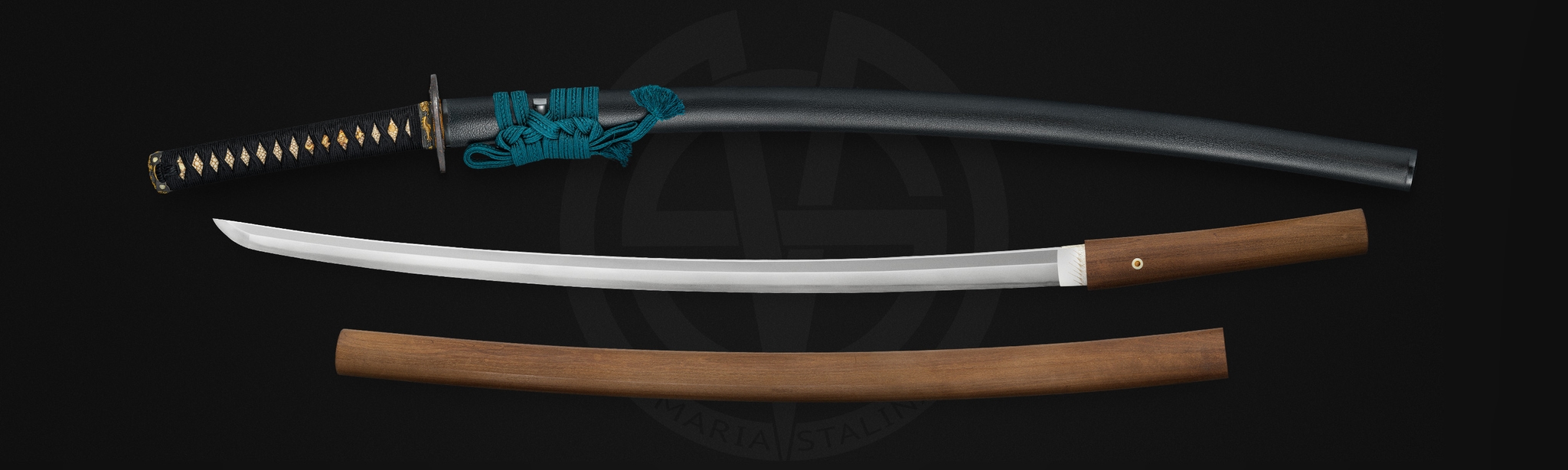
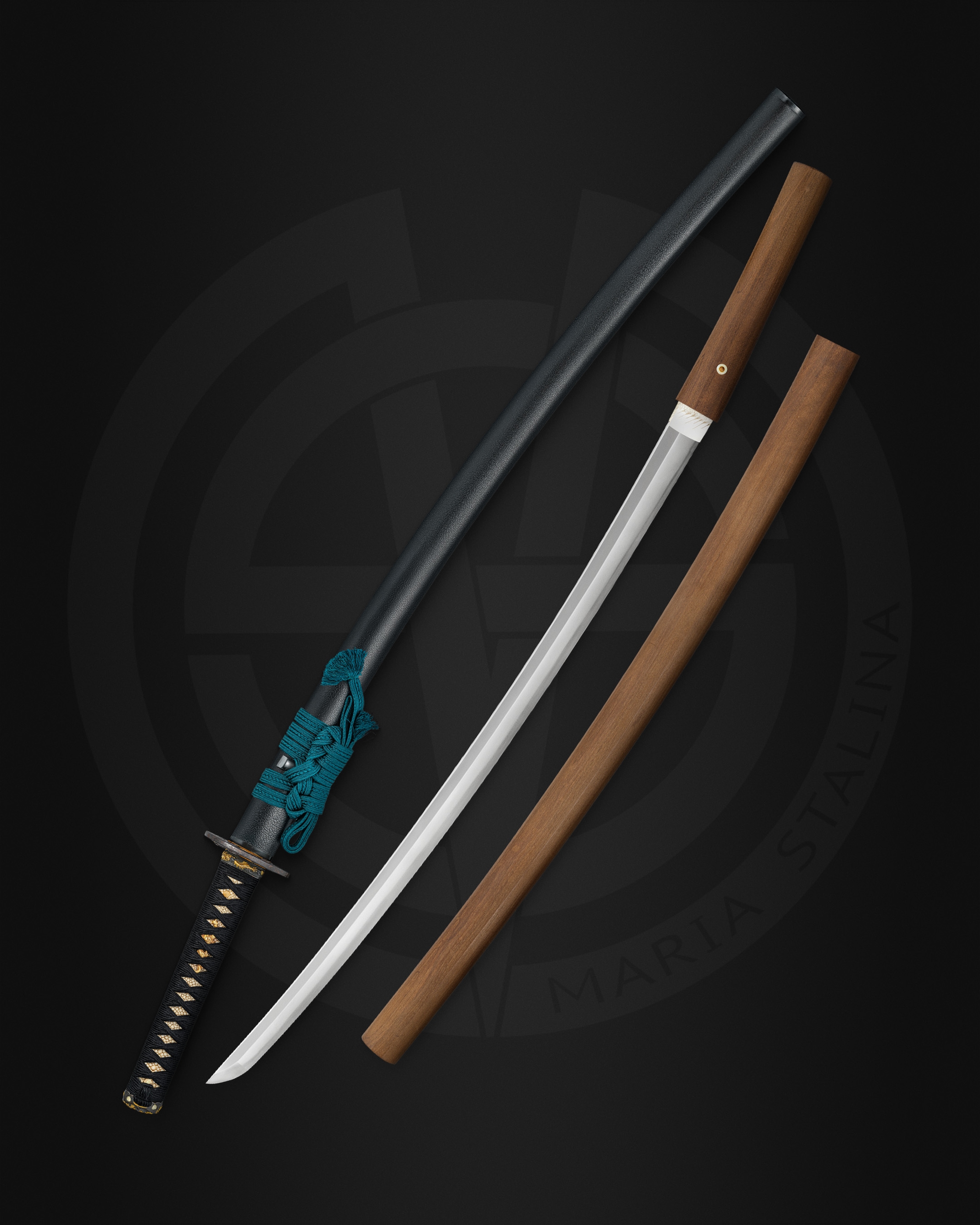
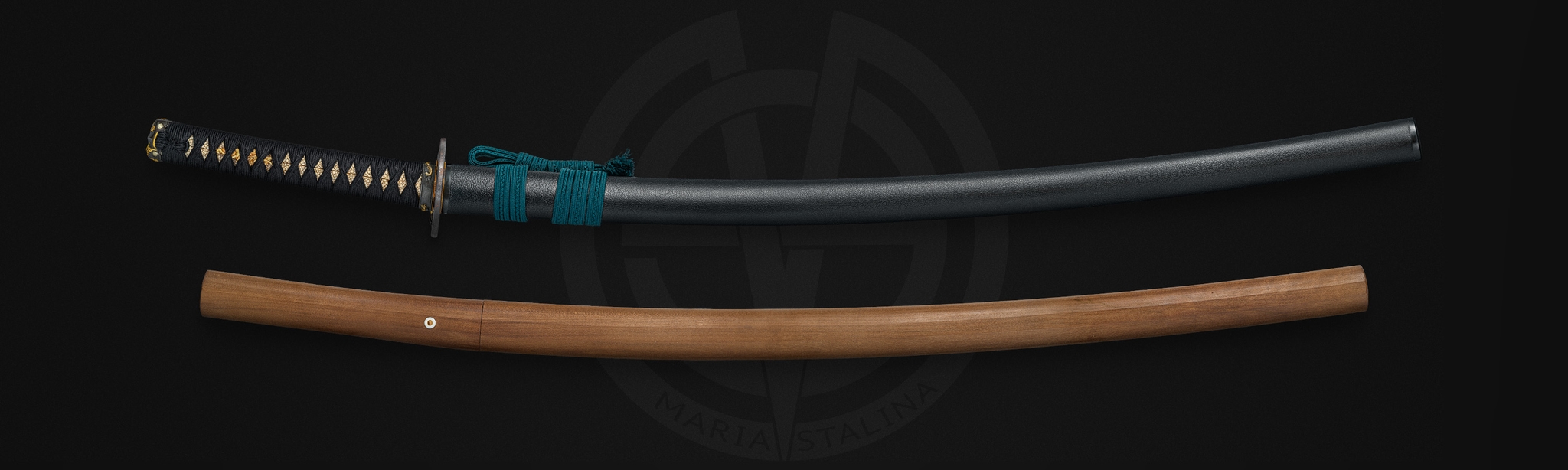
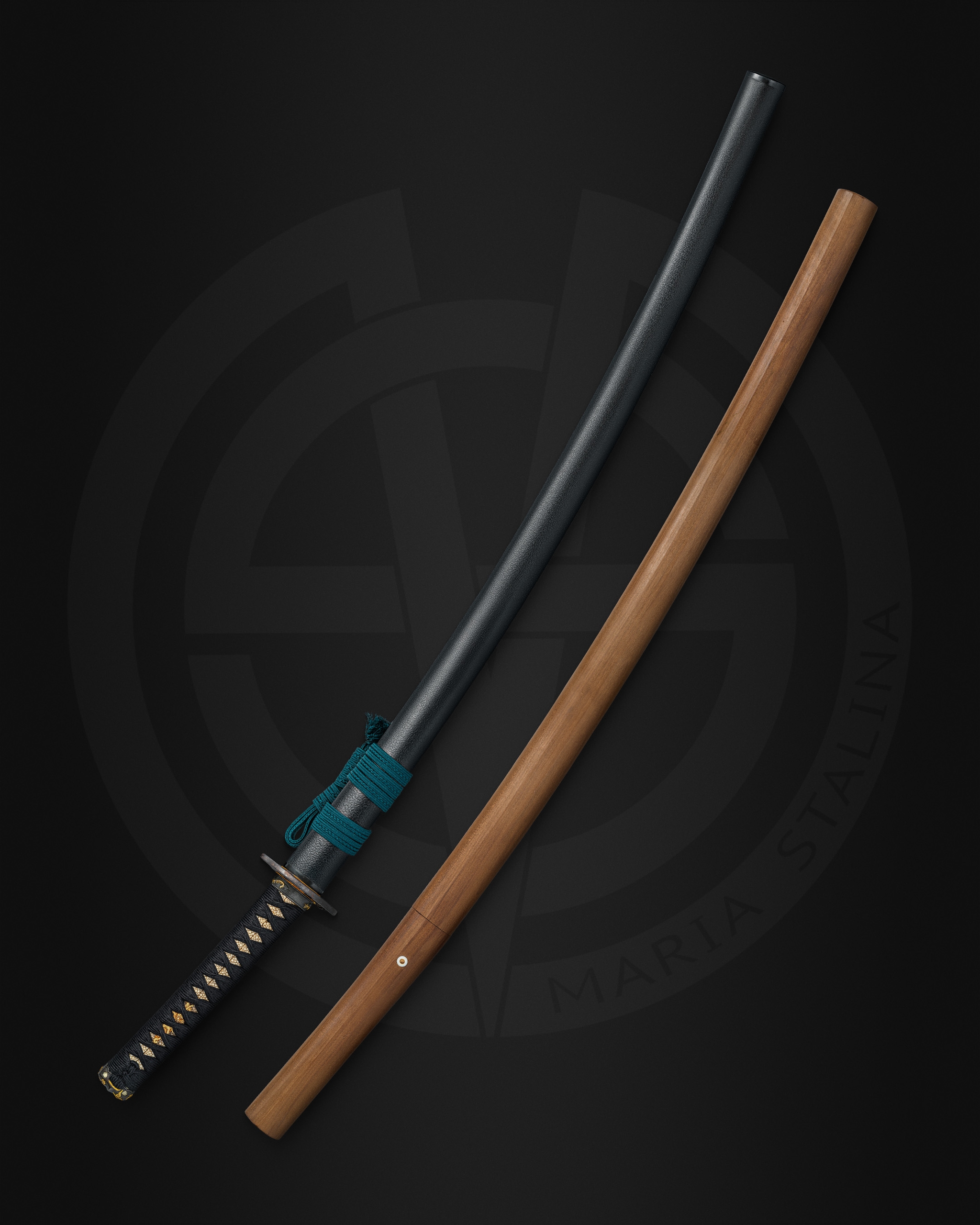
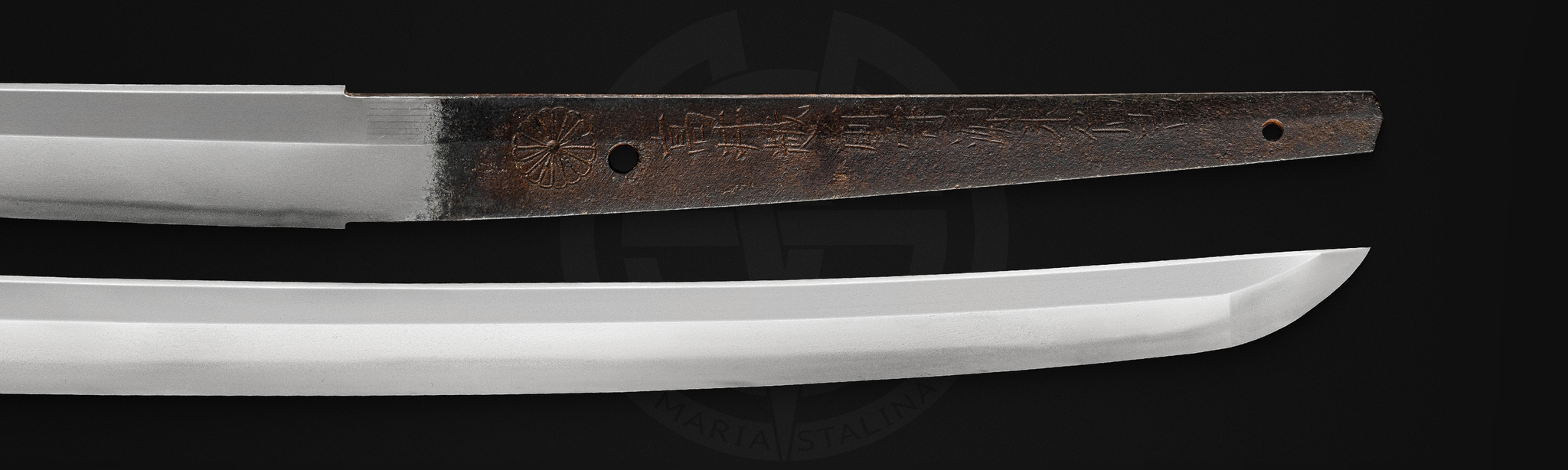
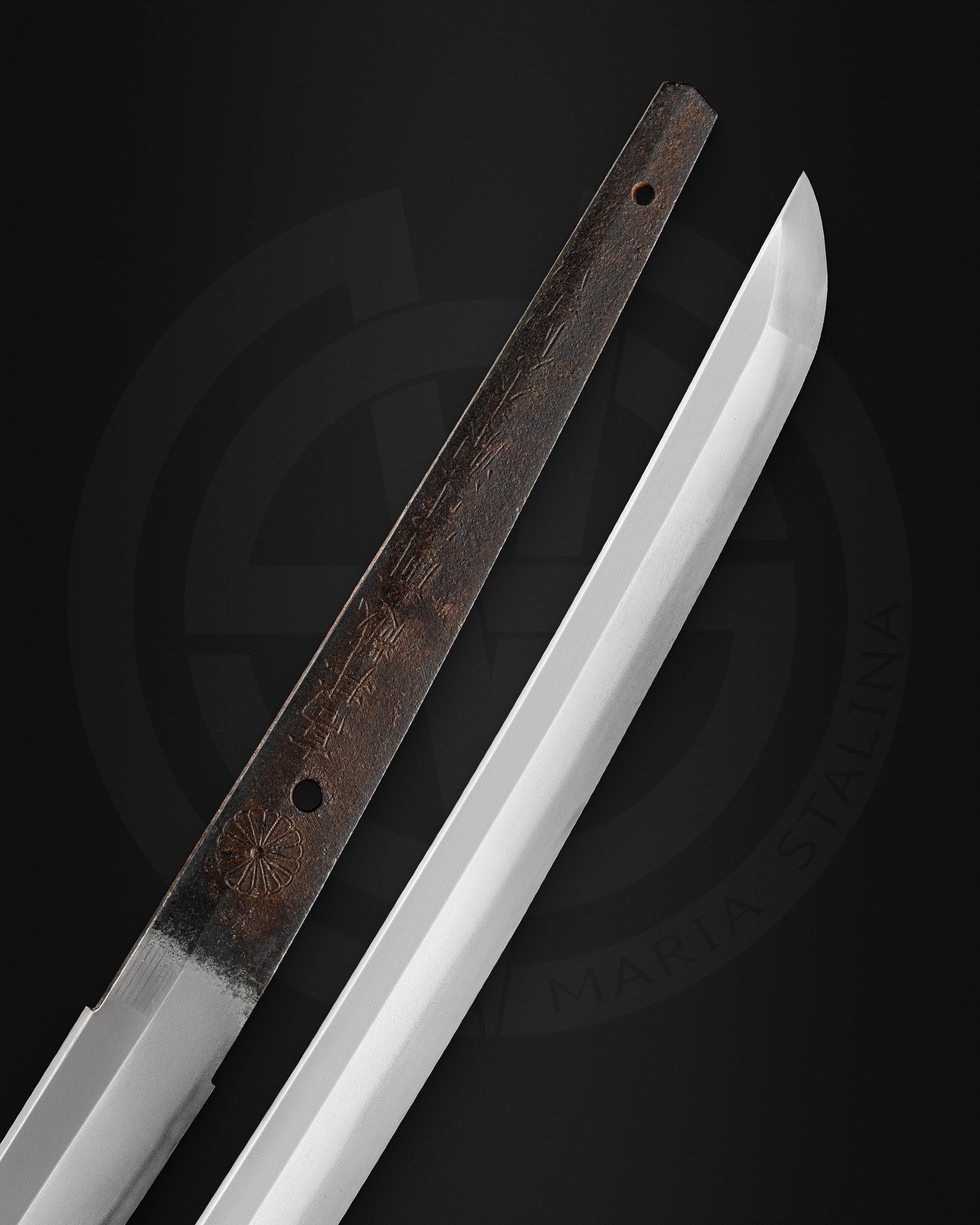
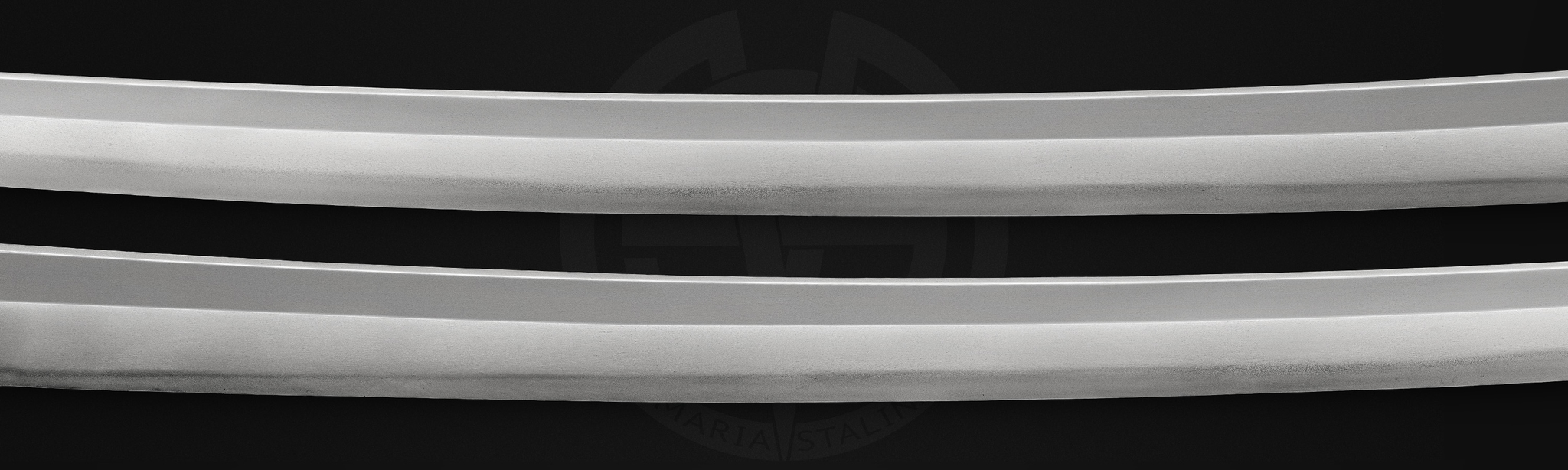
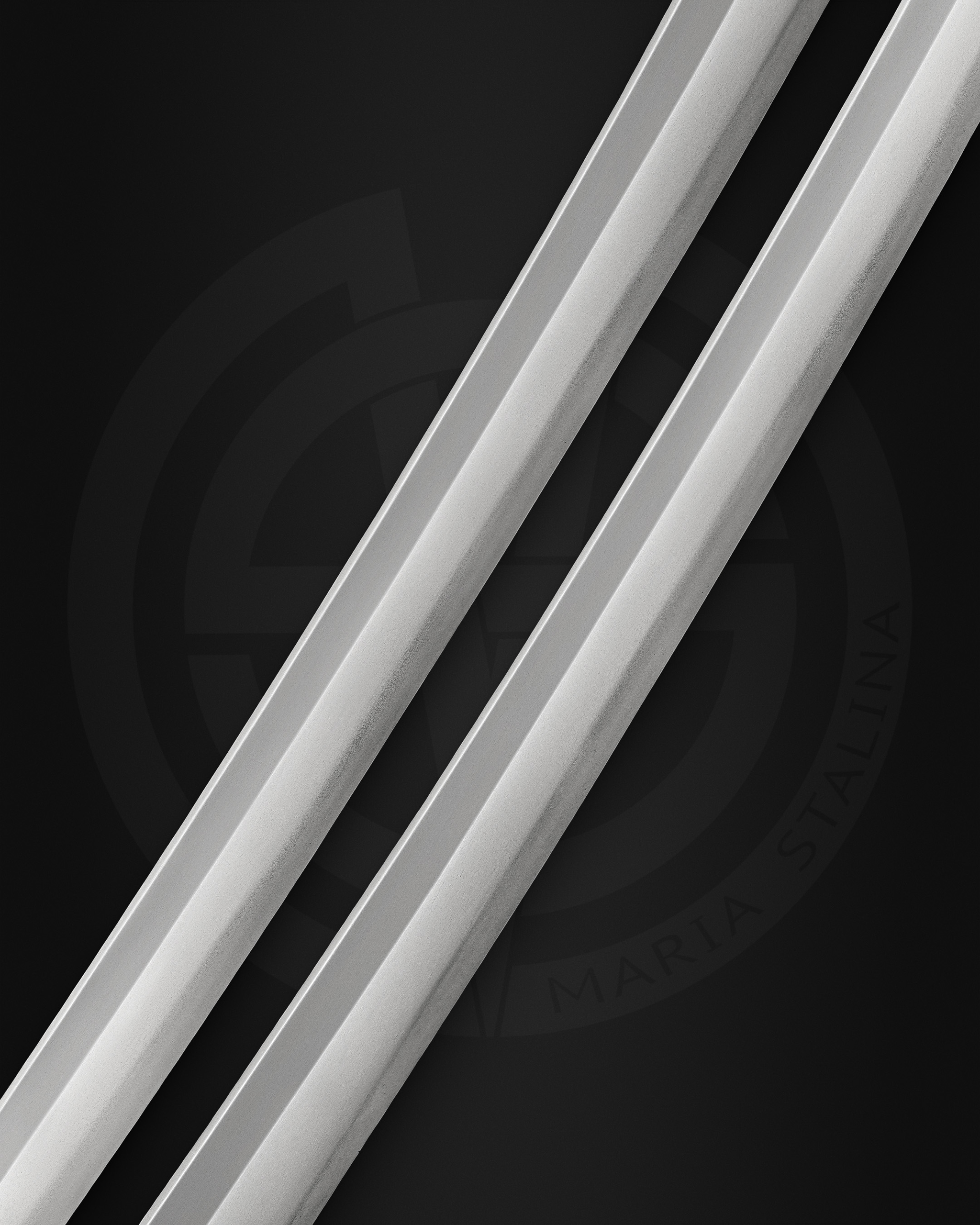
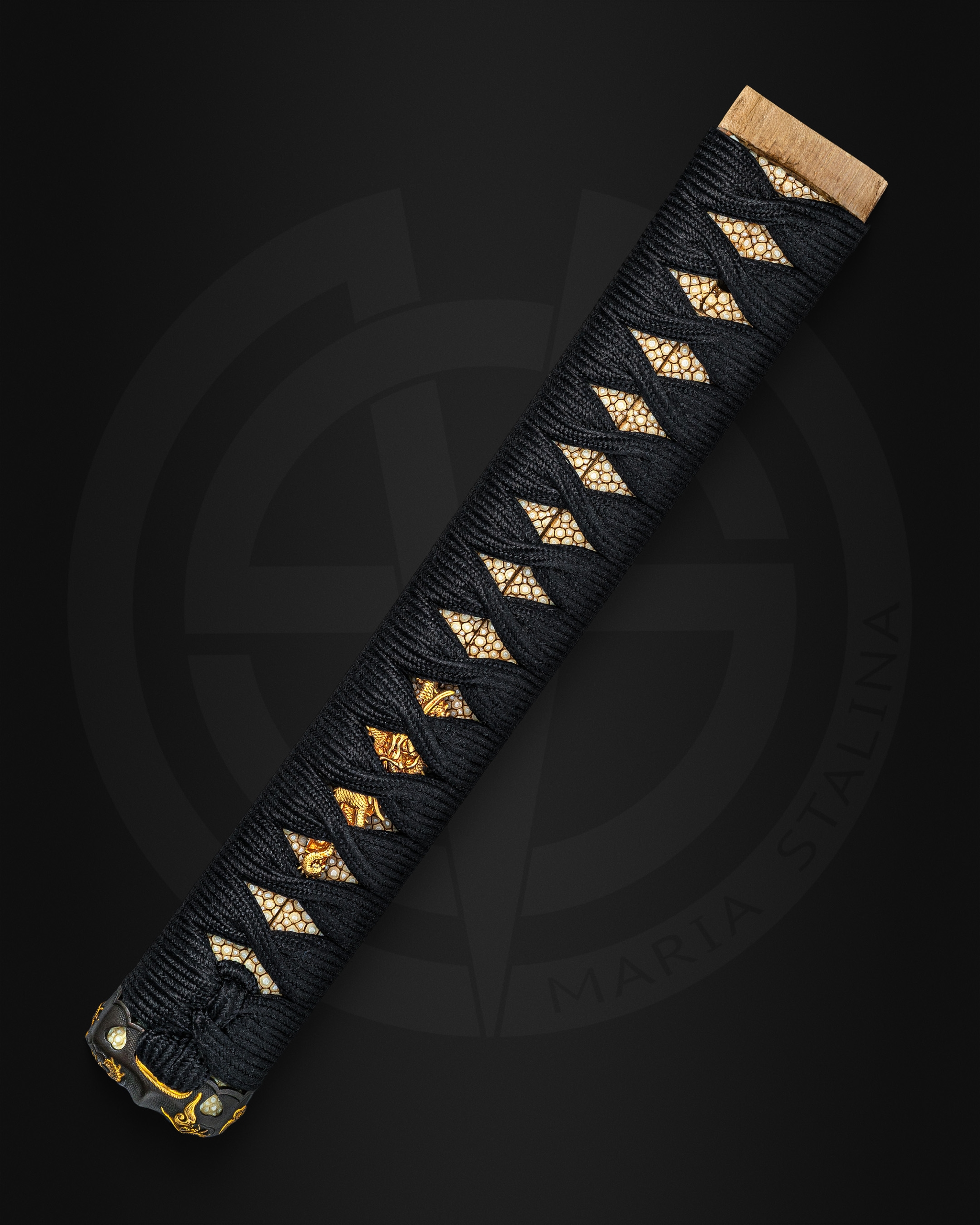
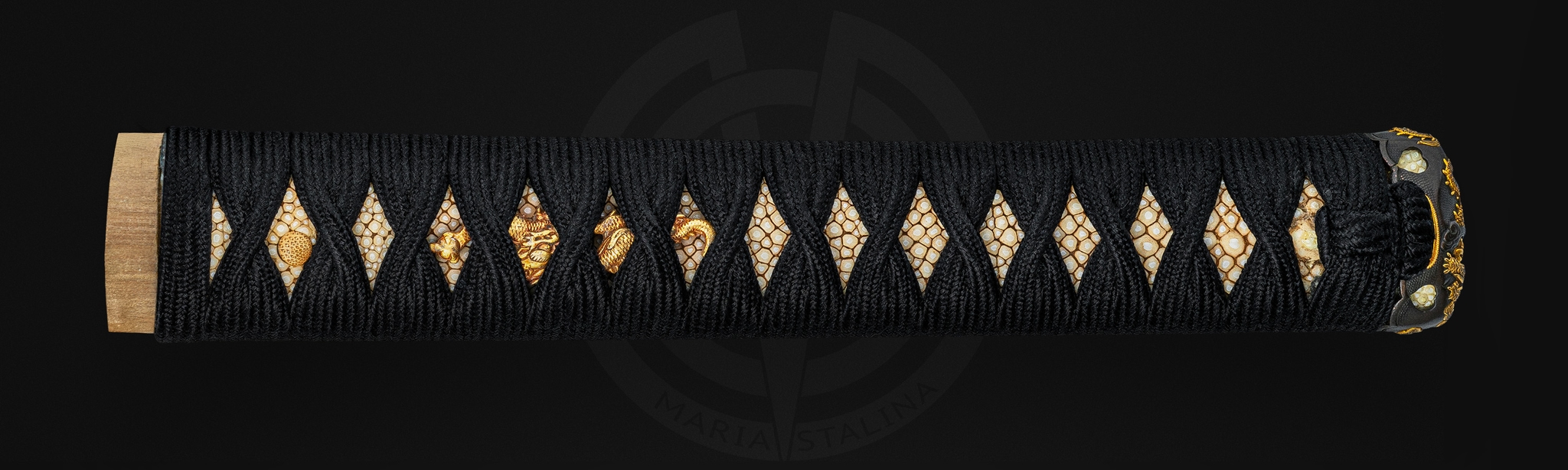
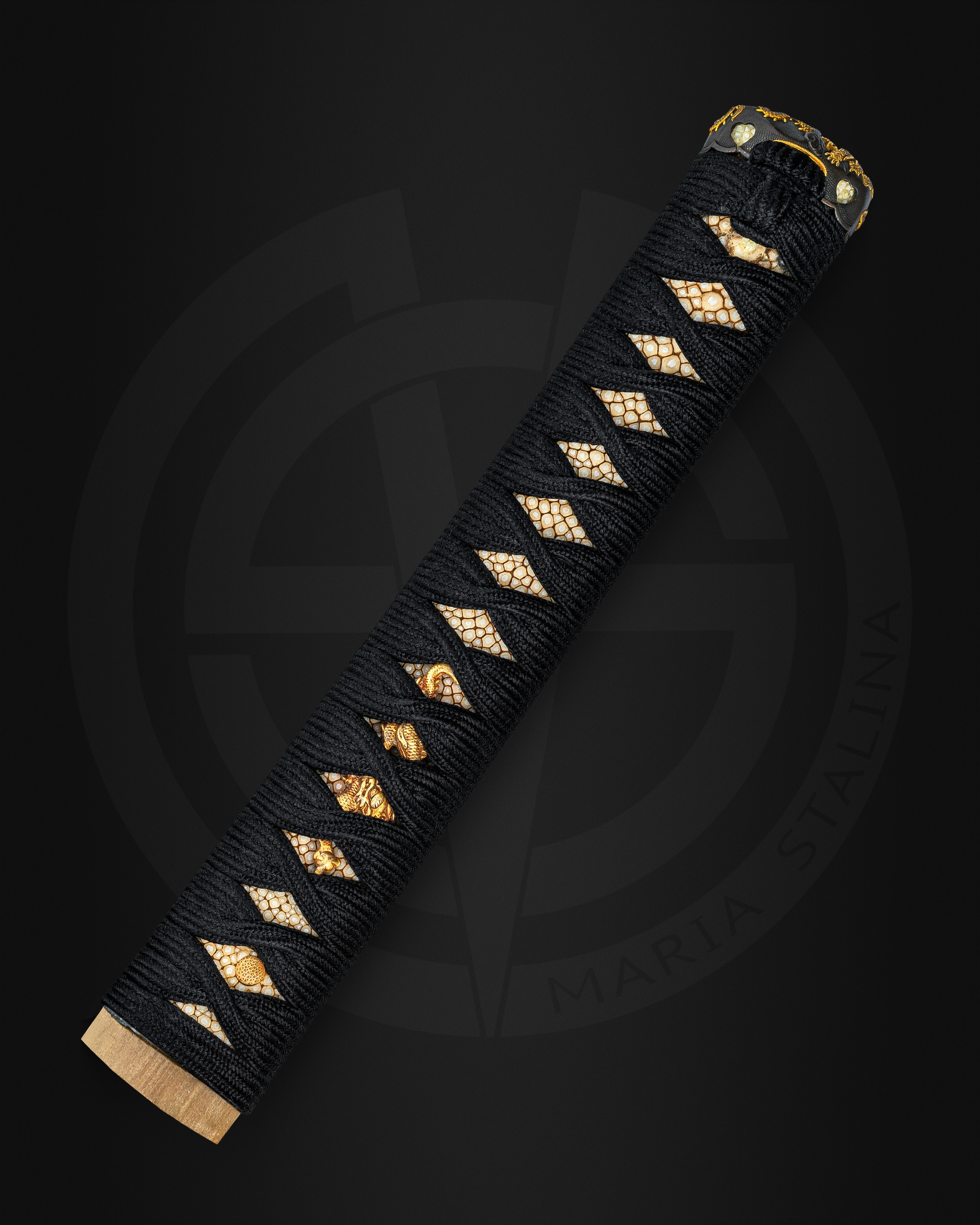
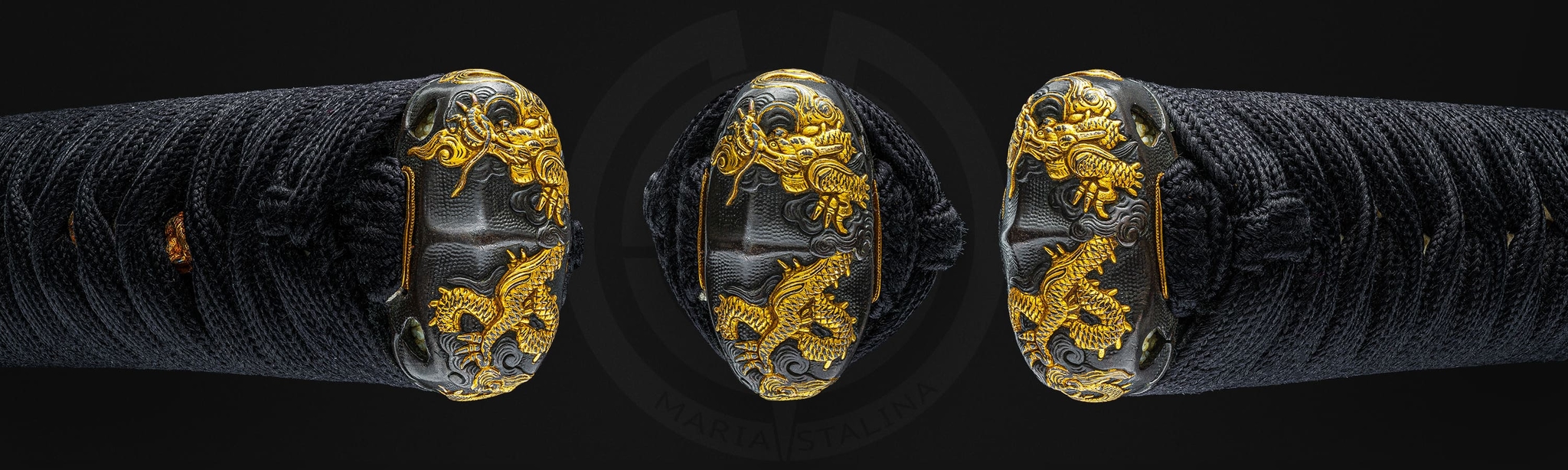
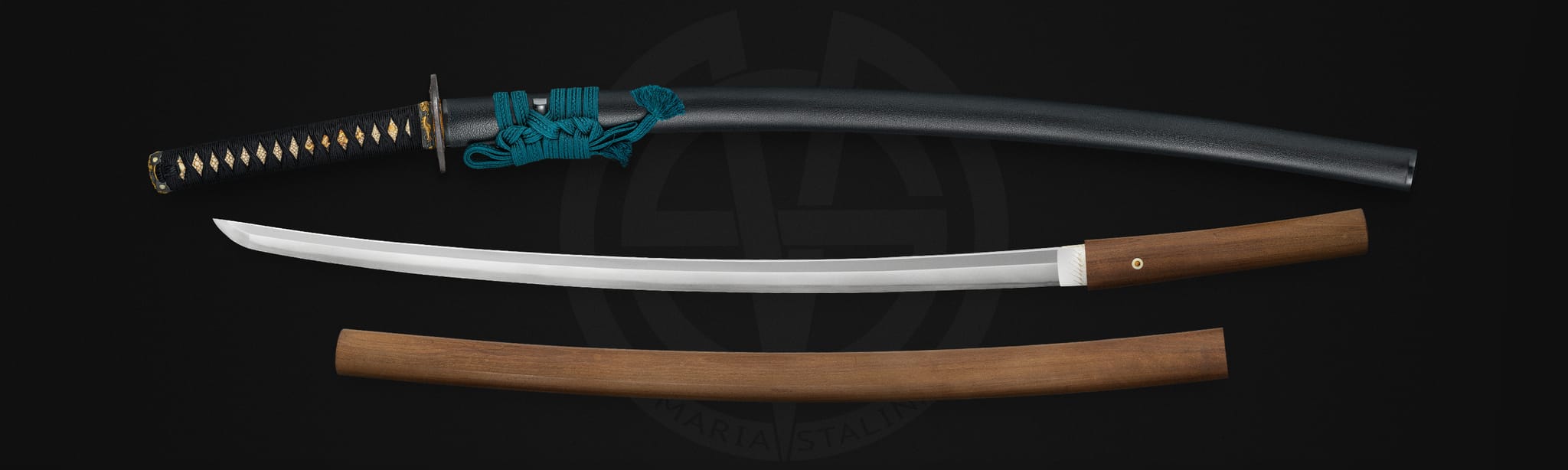
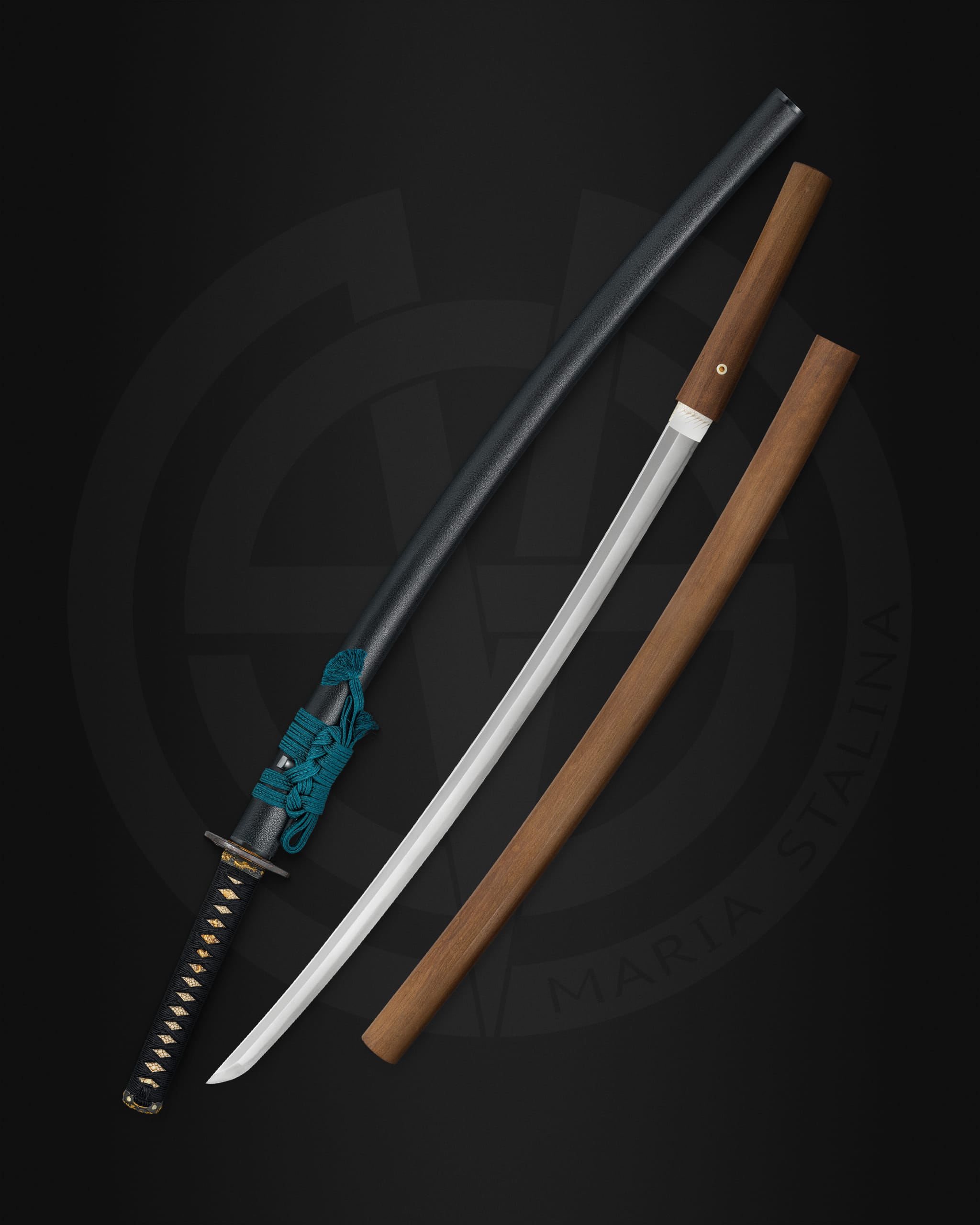
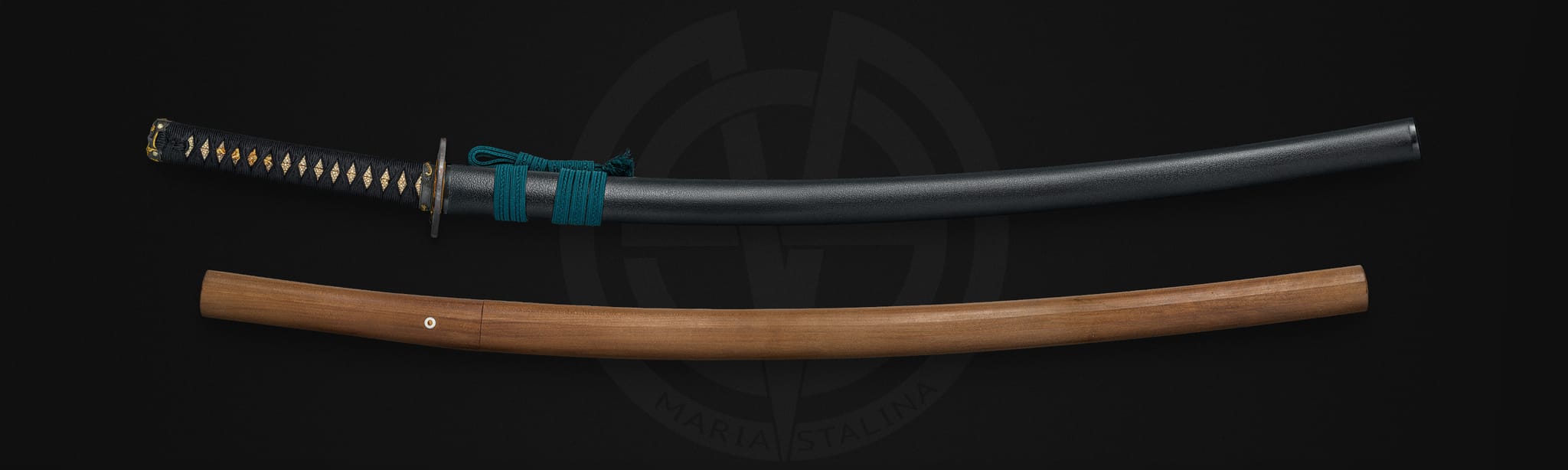
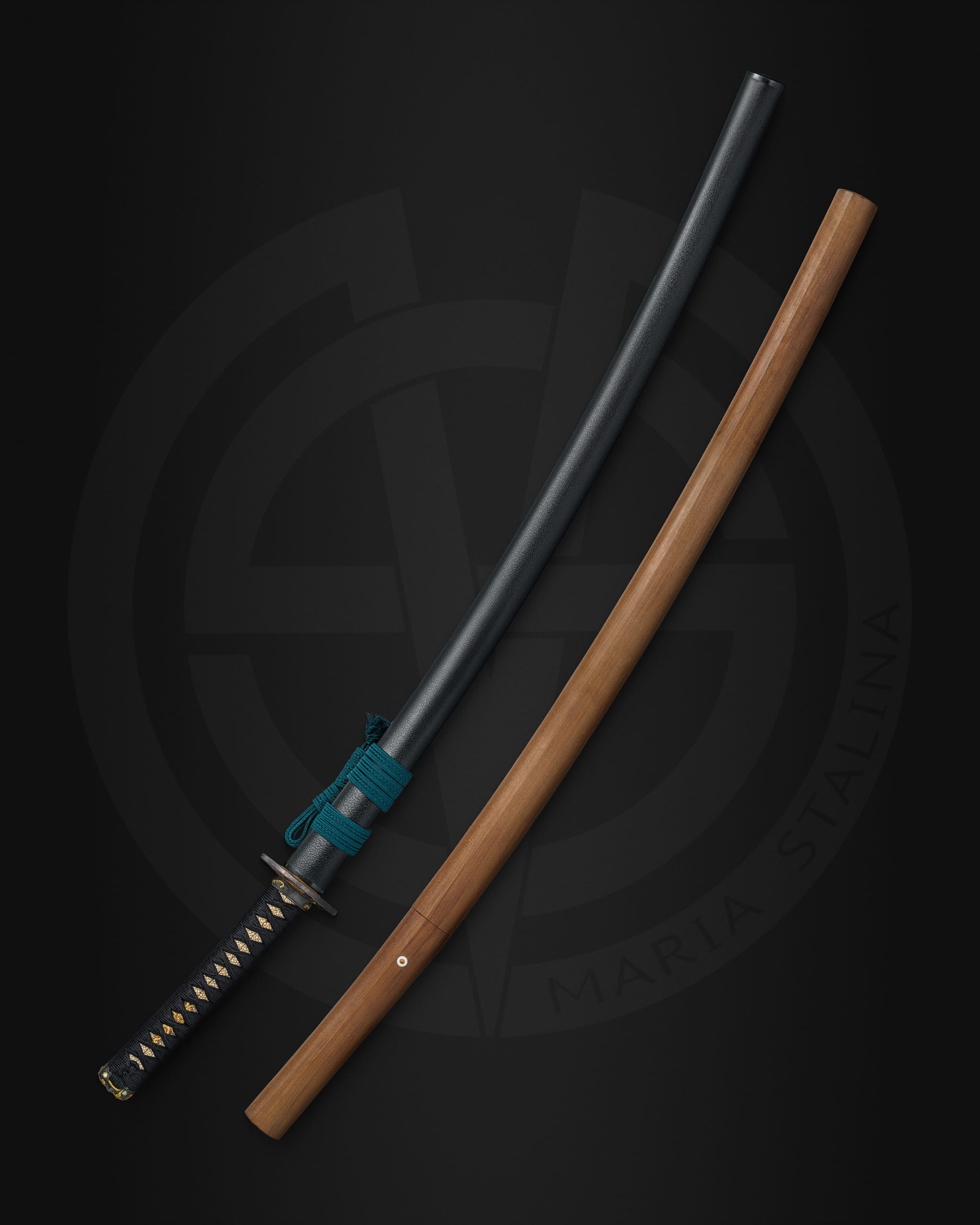
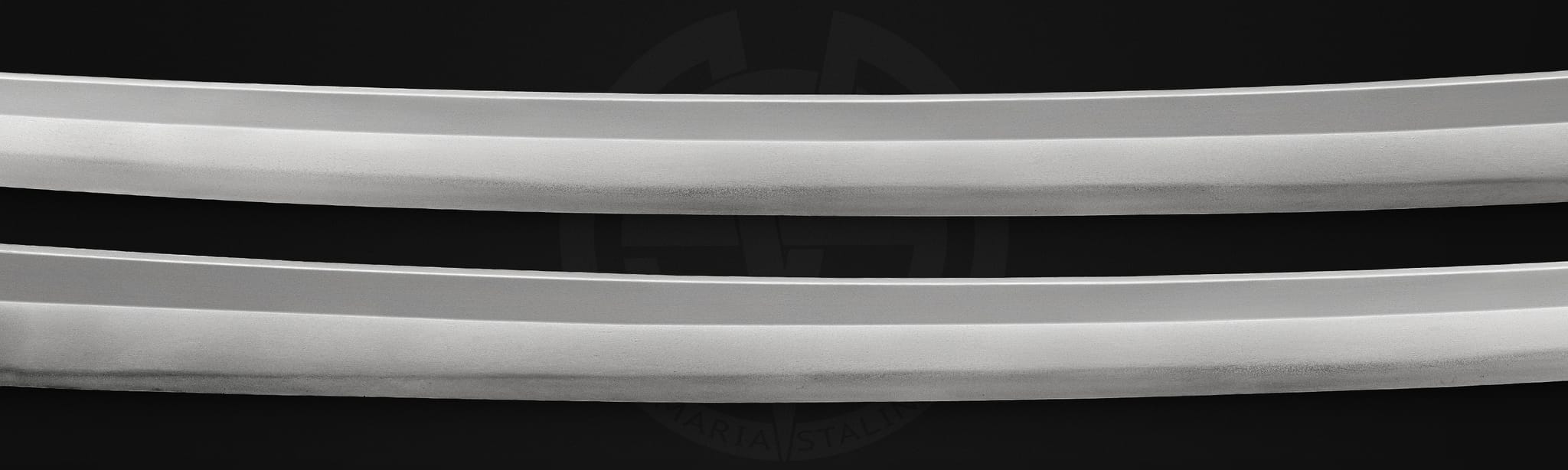
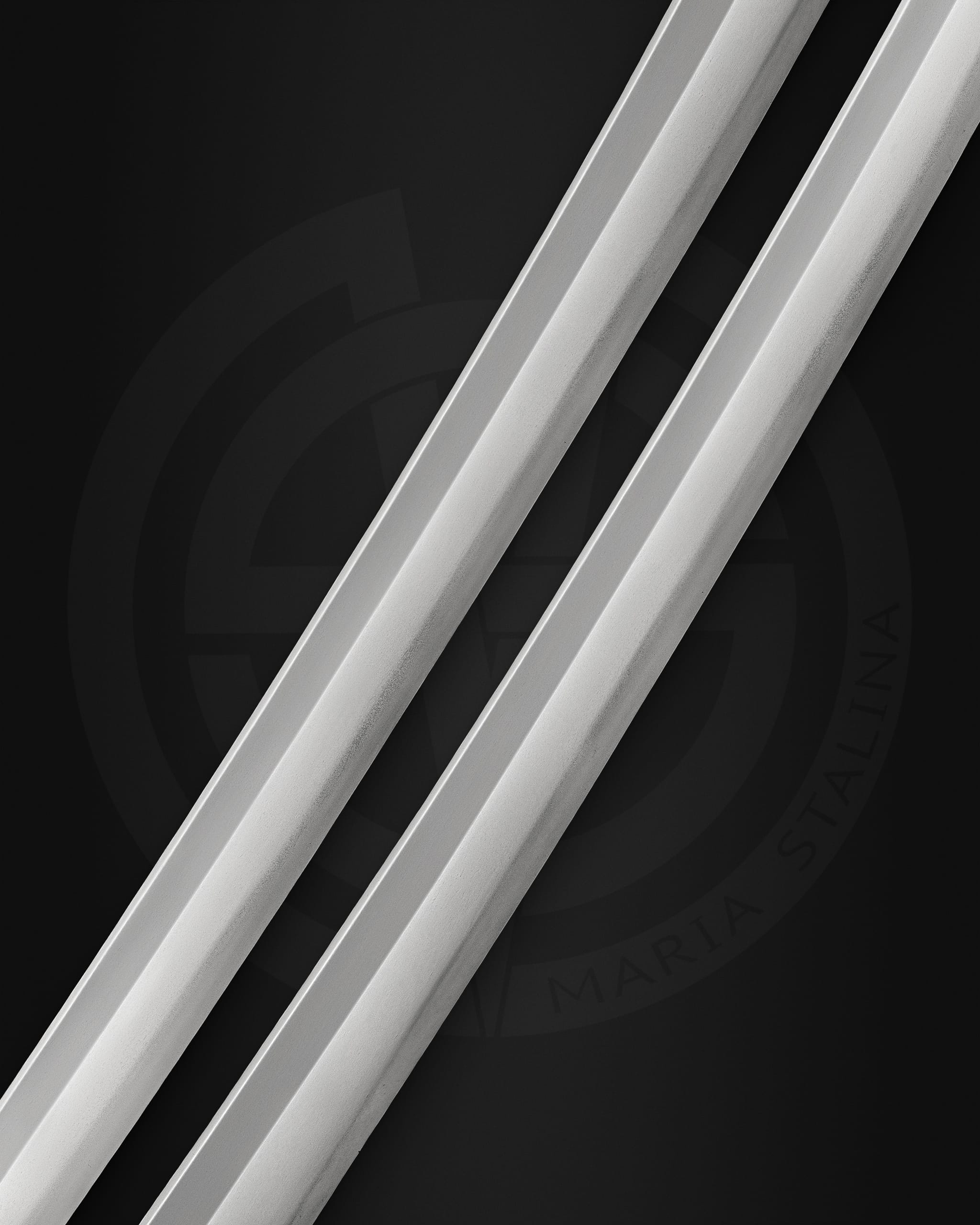
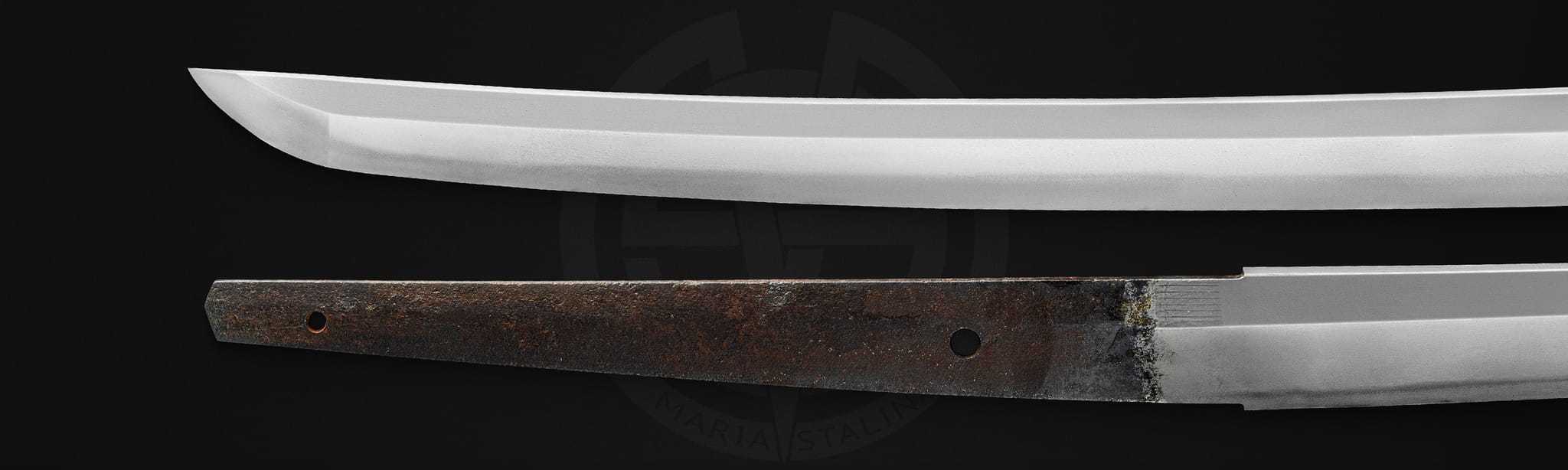
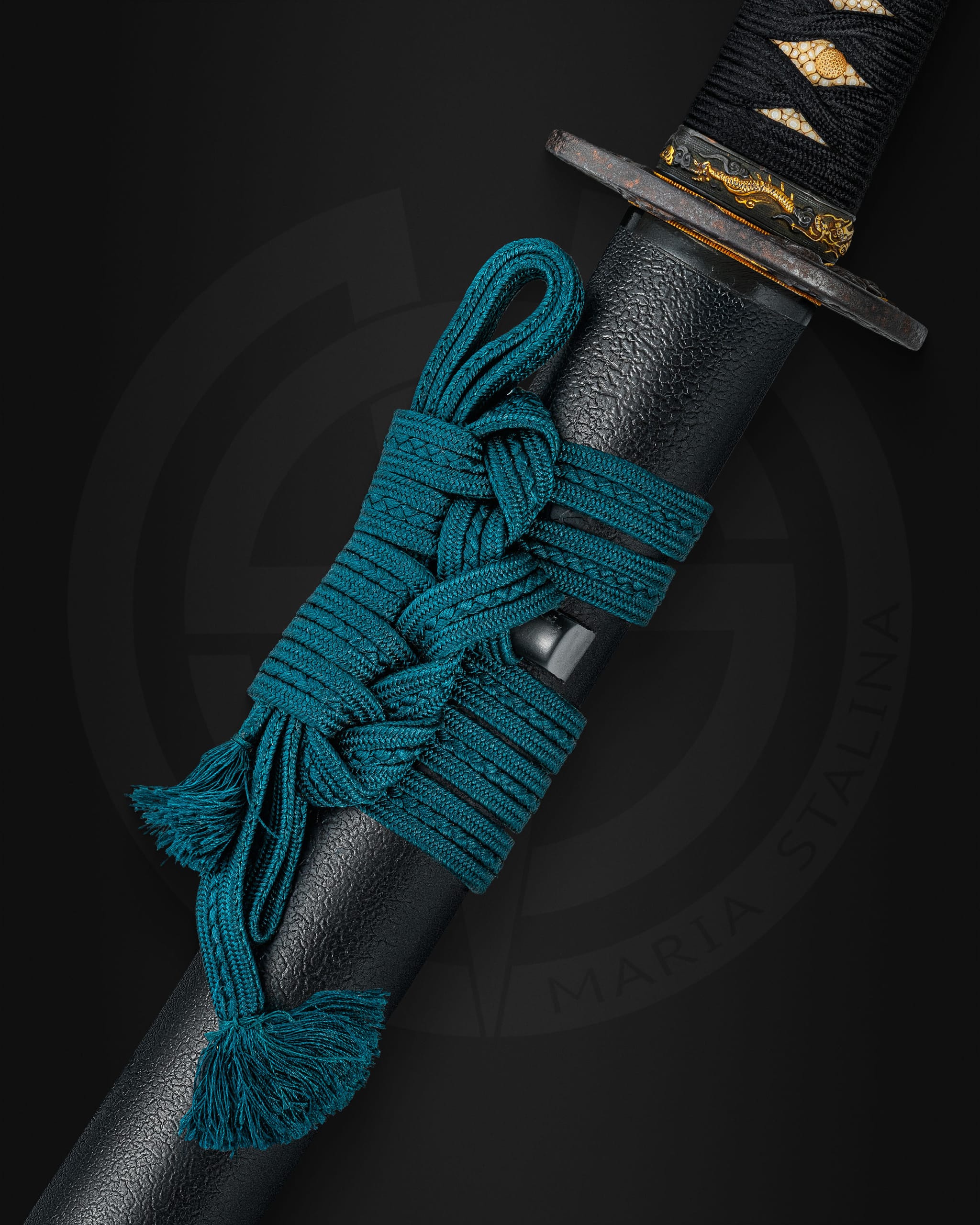
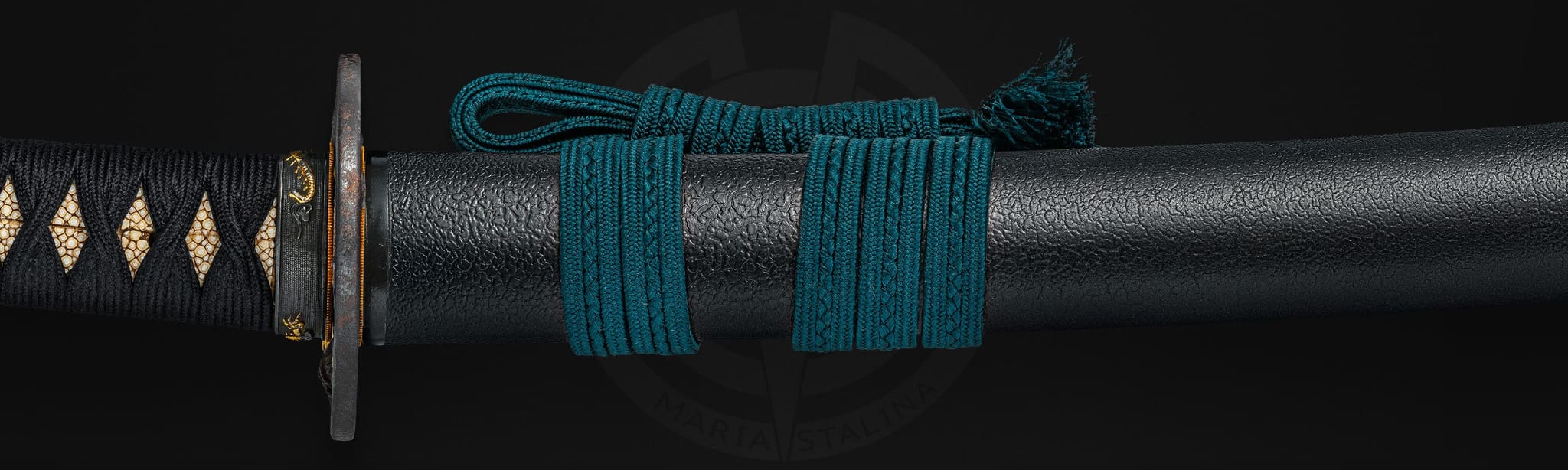
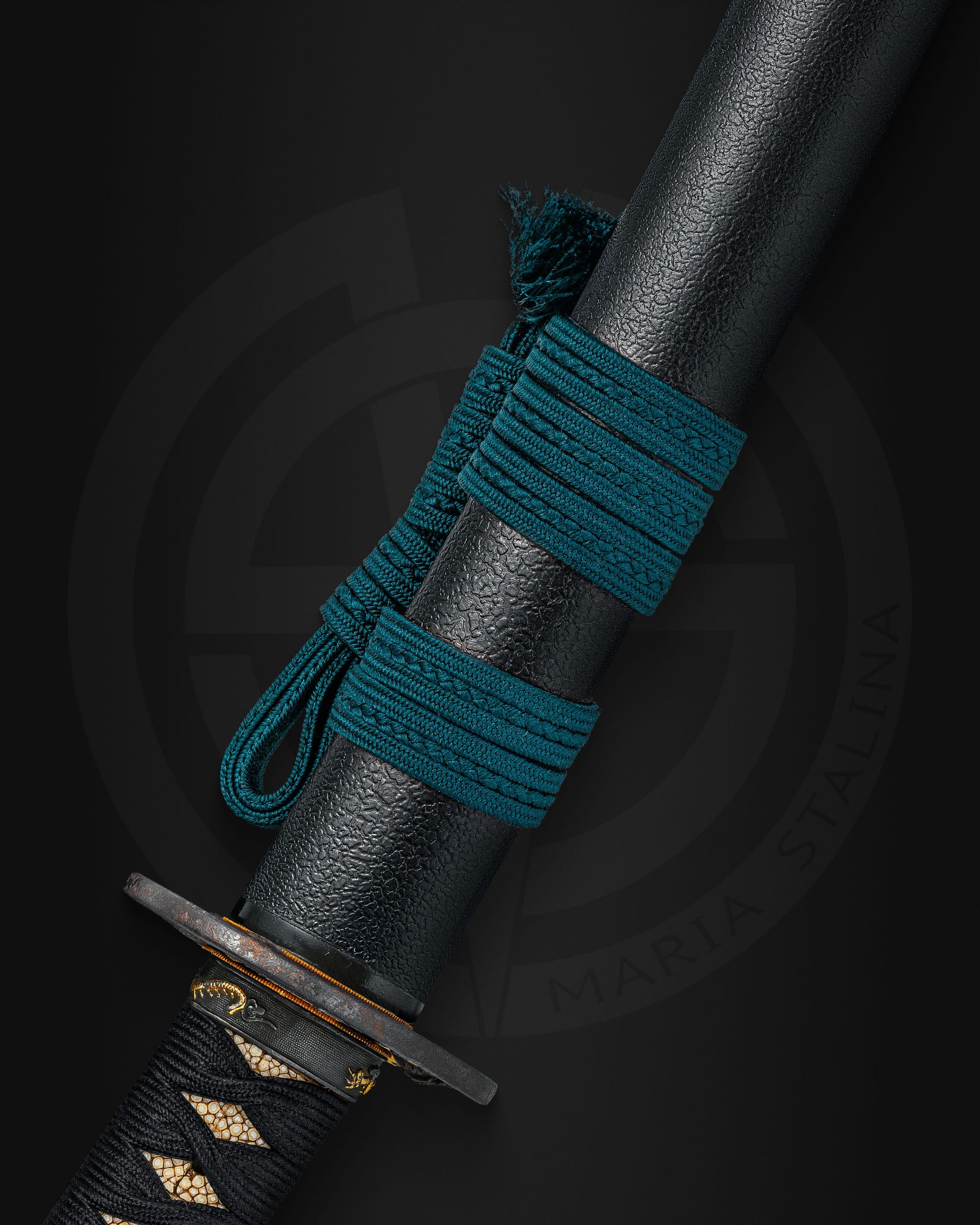
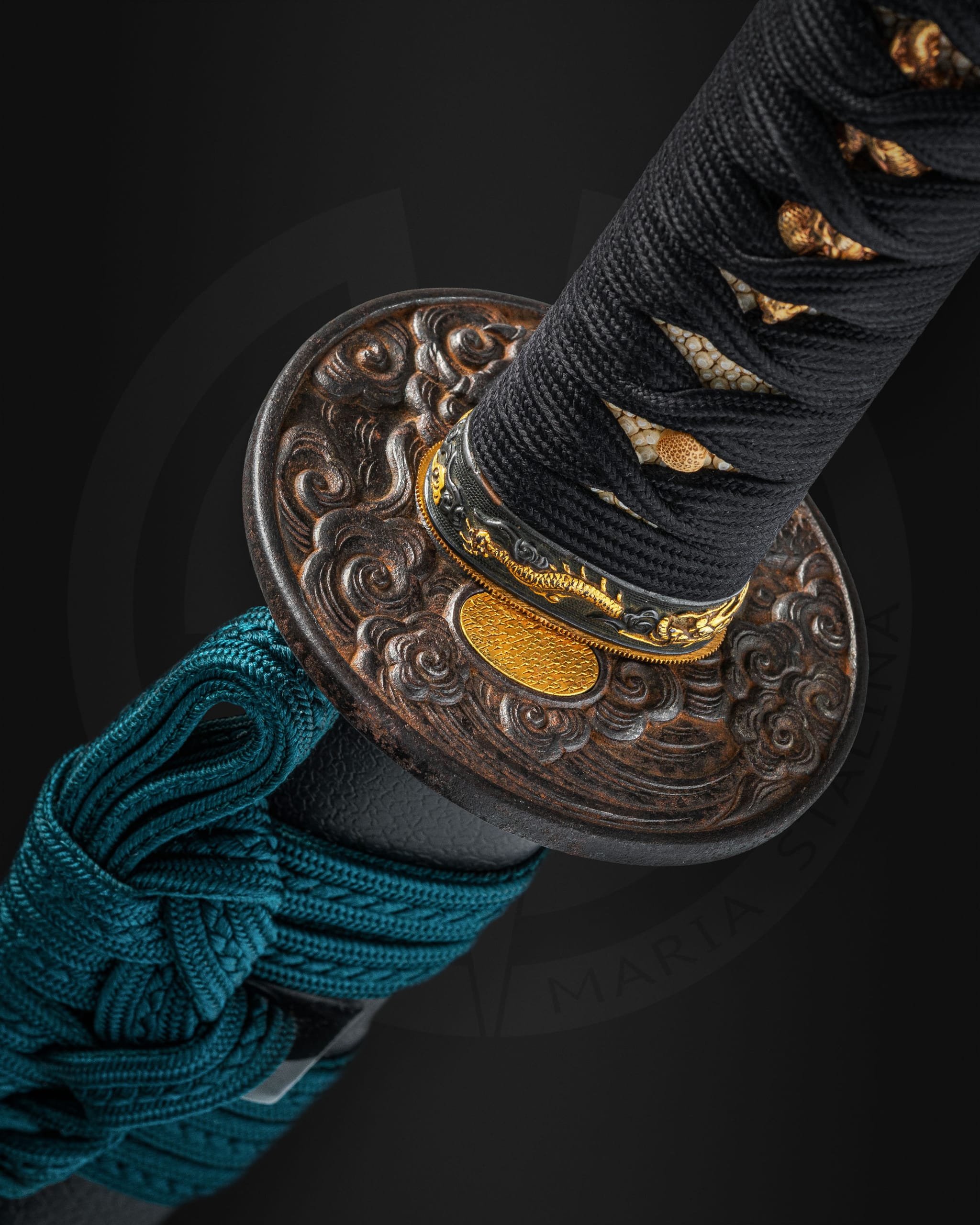
This is an example of traditional Japanese swordsmithing — a katana crafted by Takai Nobuyoshi, a third-generation artisan of this family.
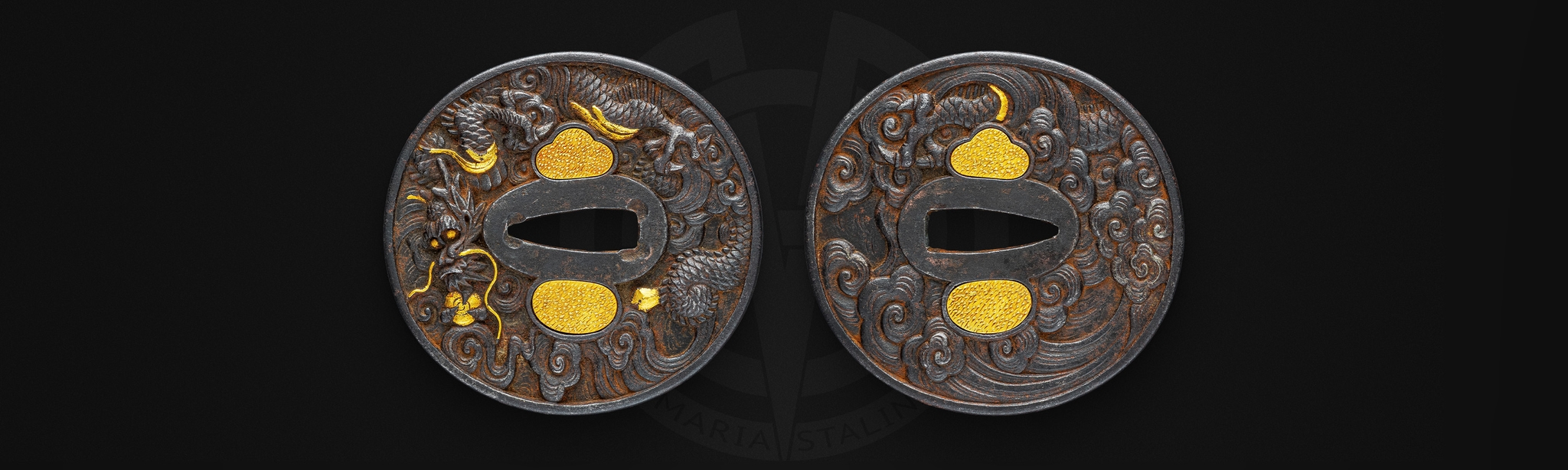
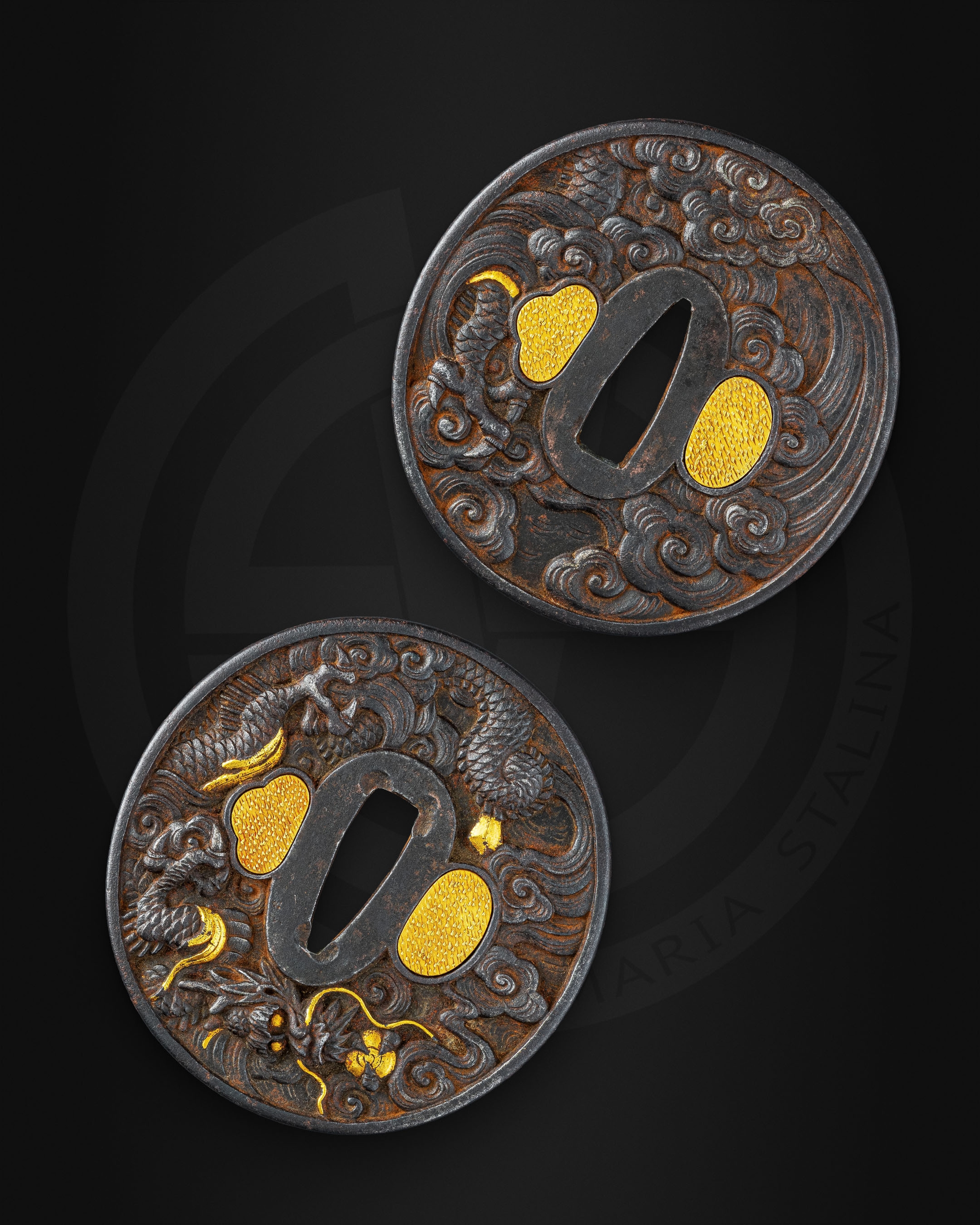
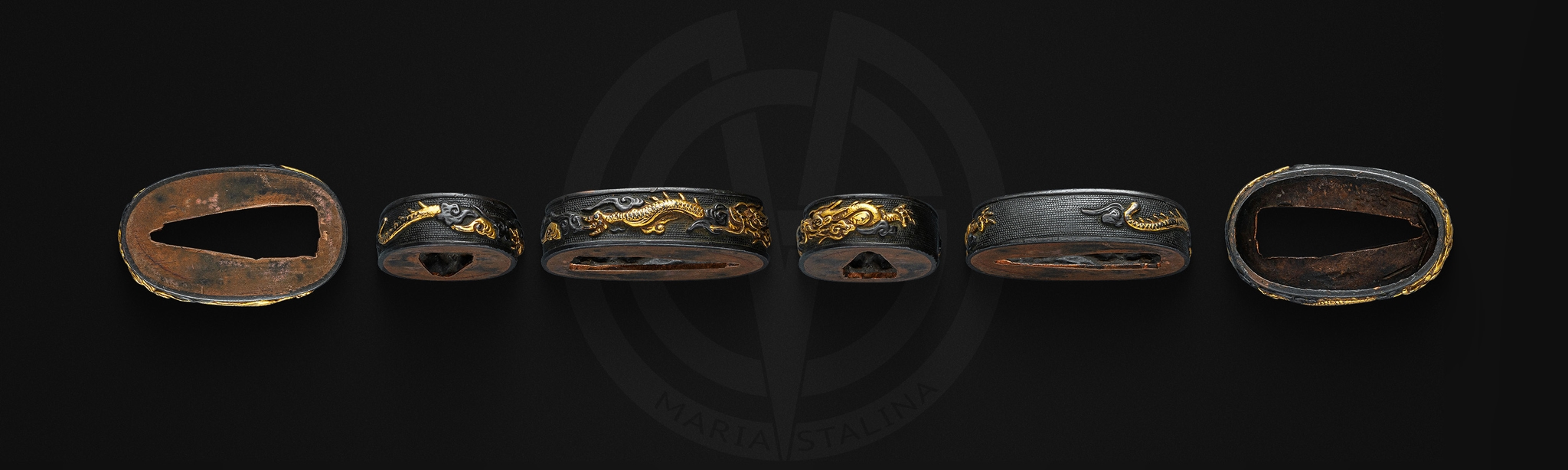
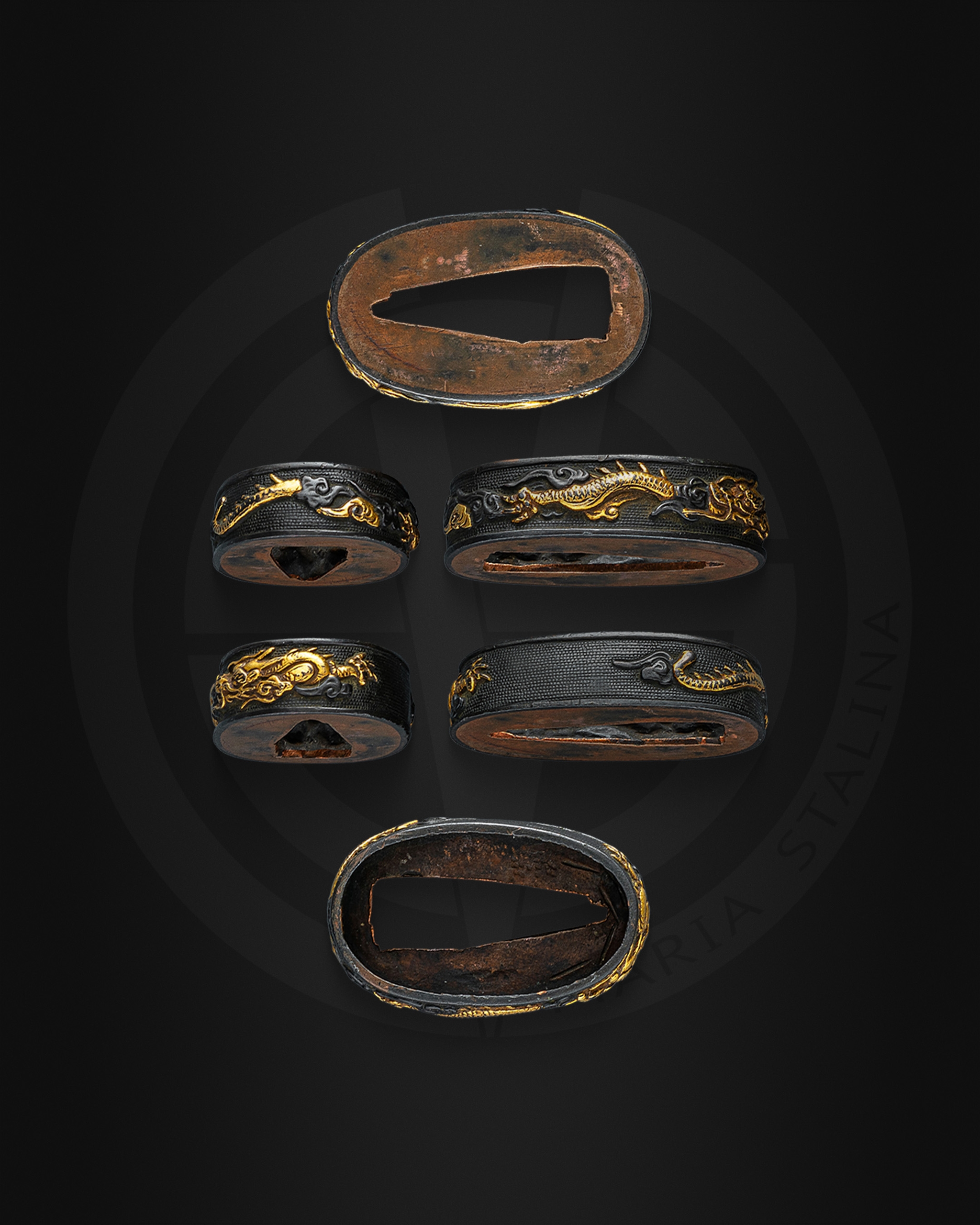
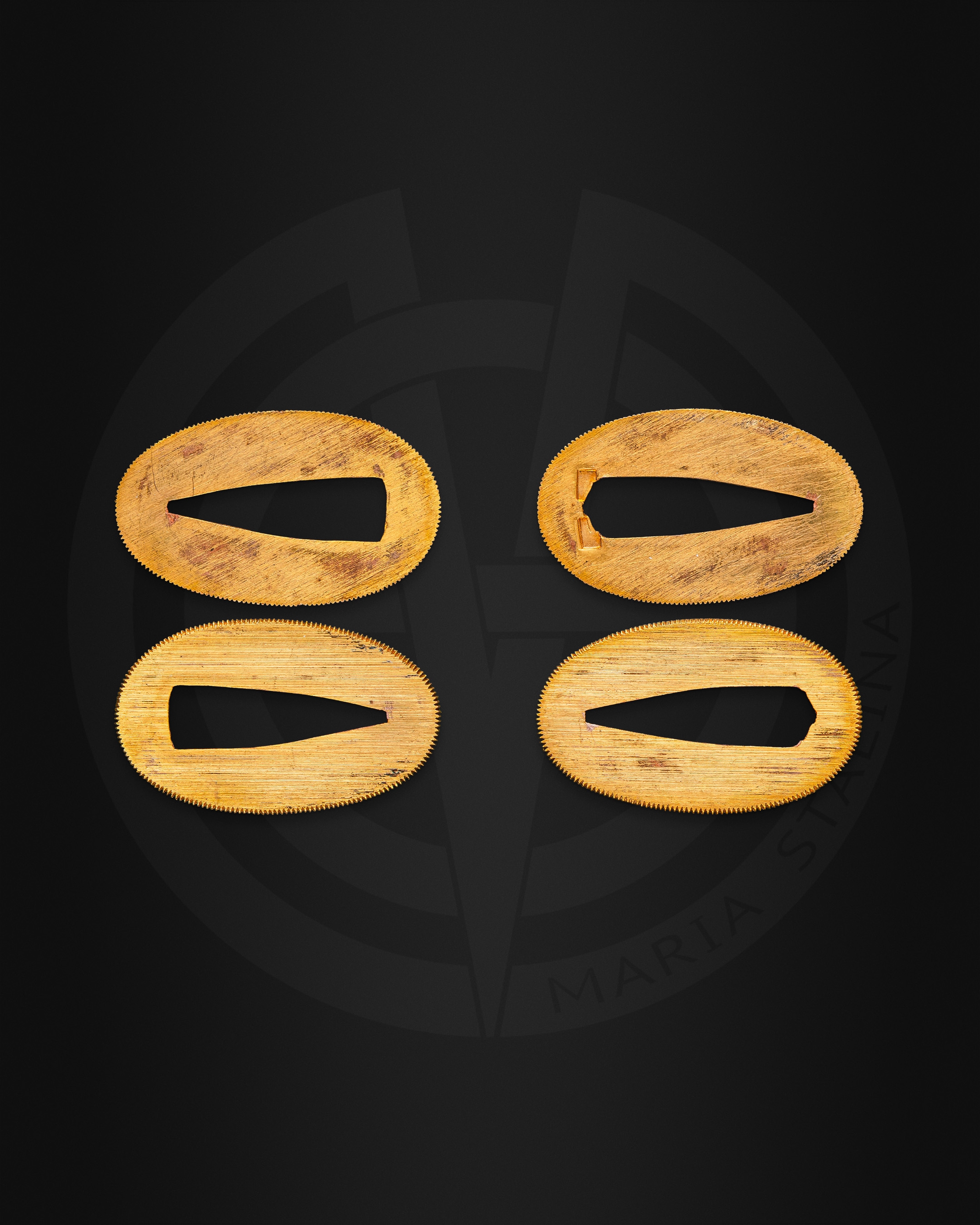
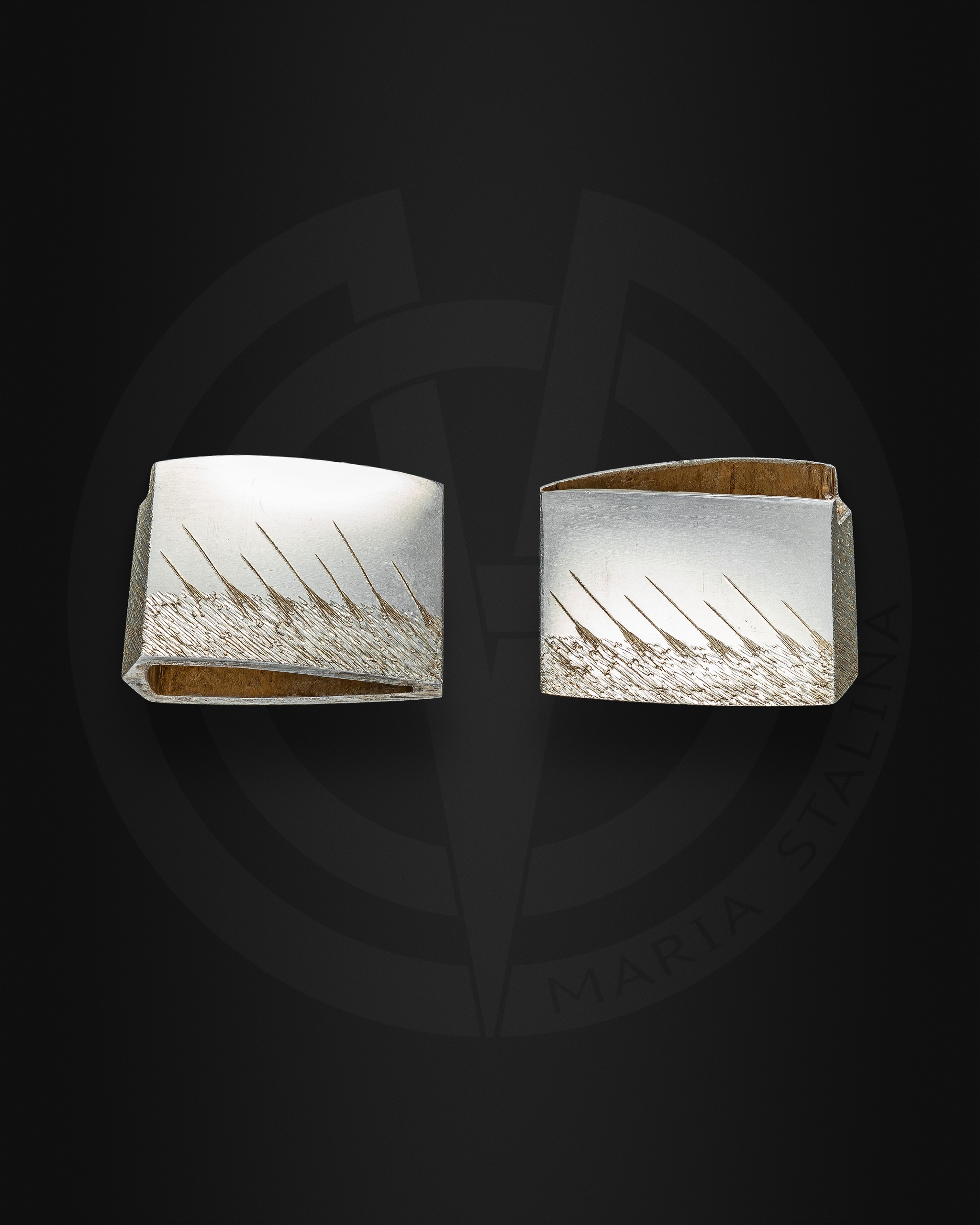
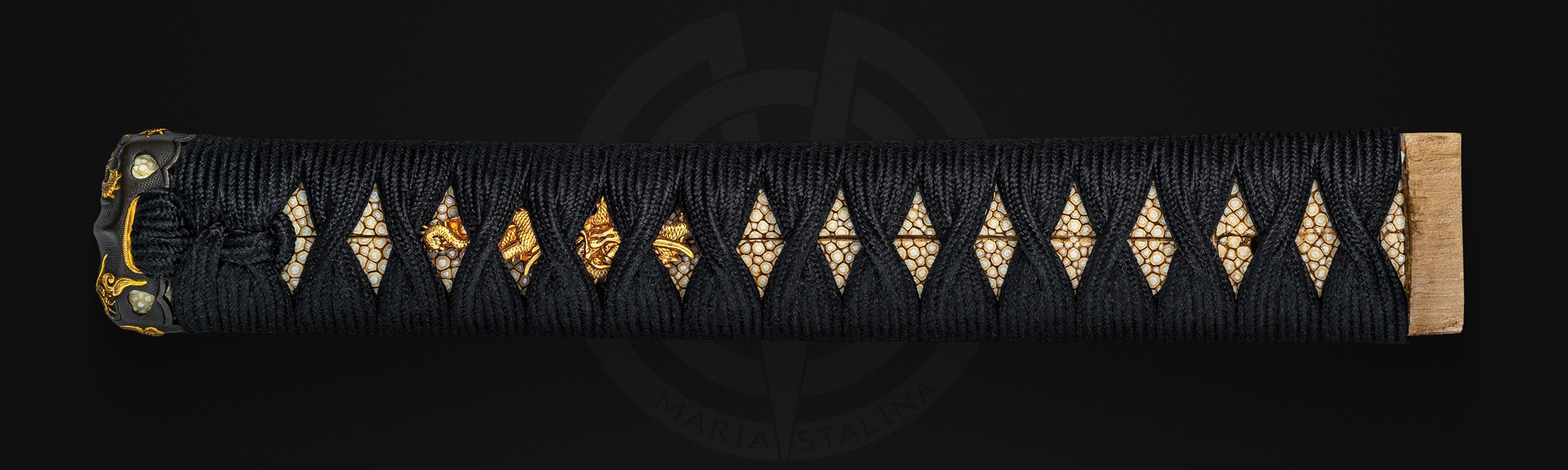
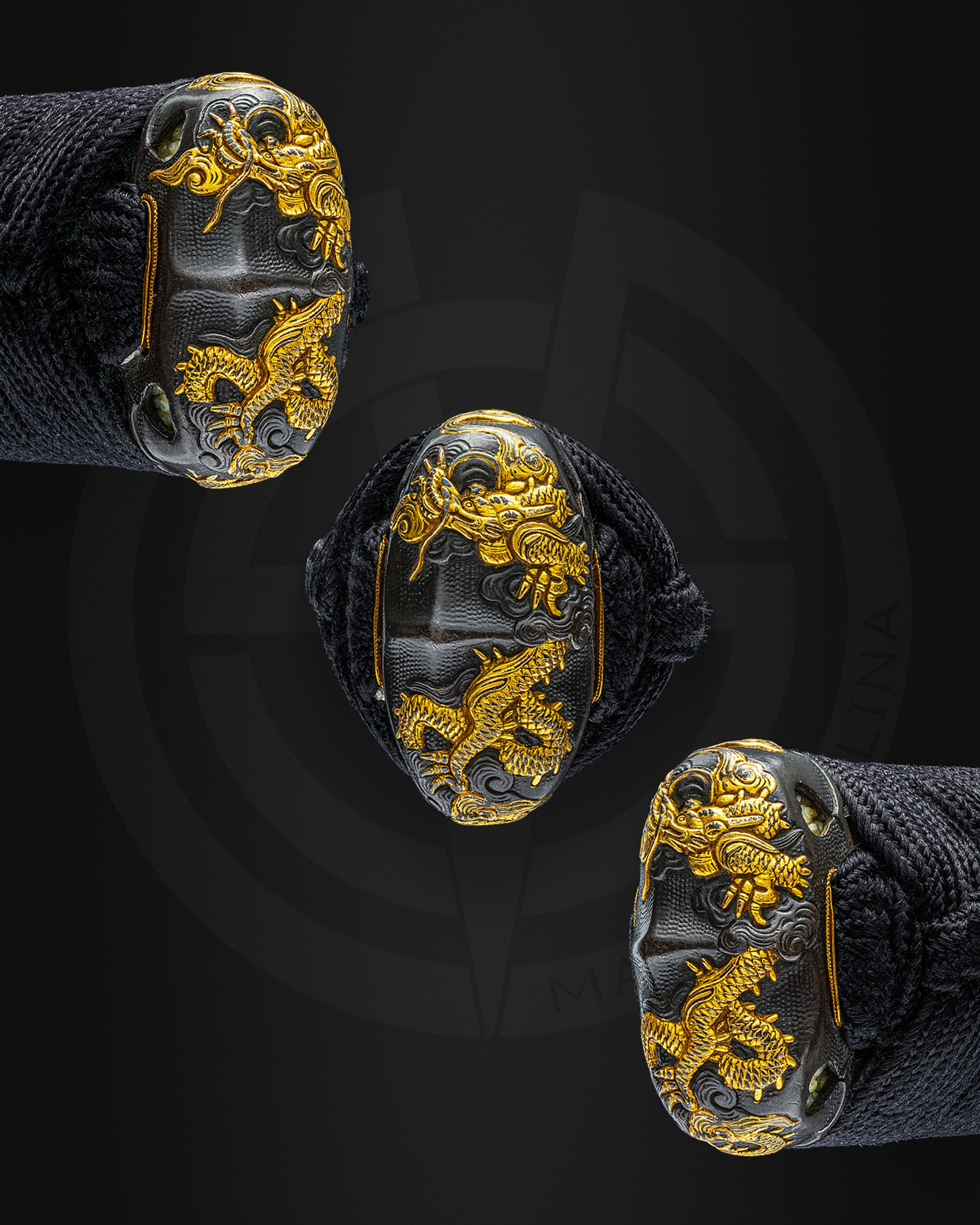
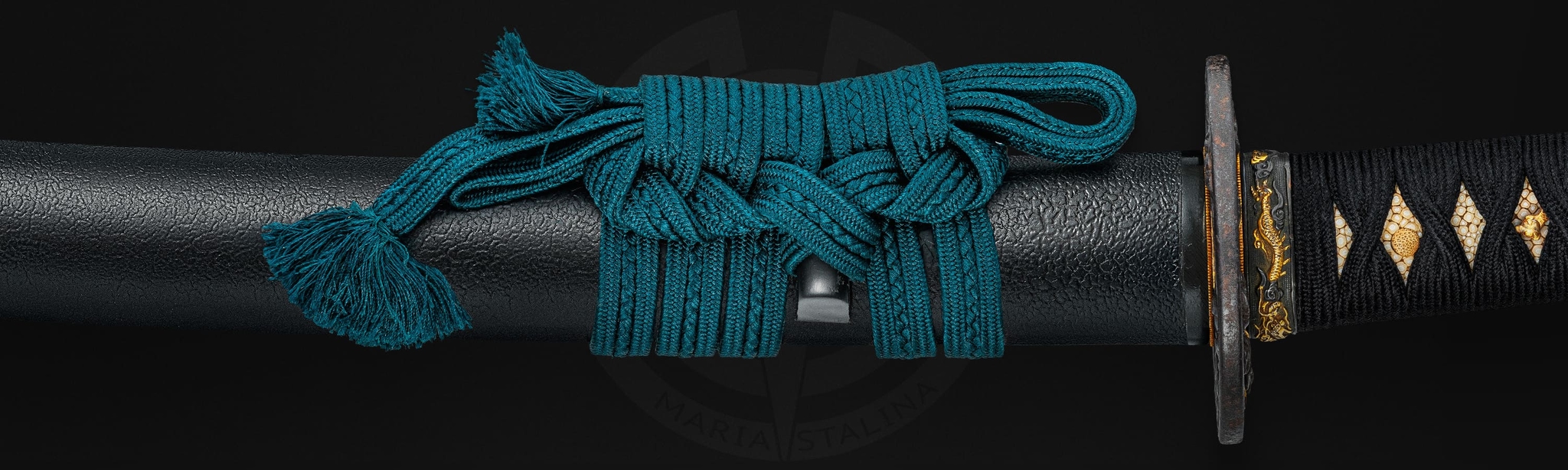
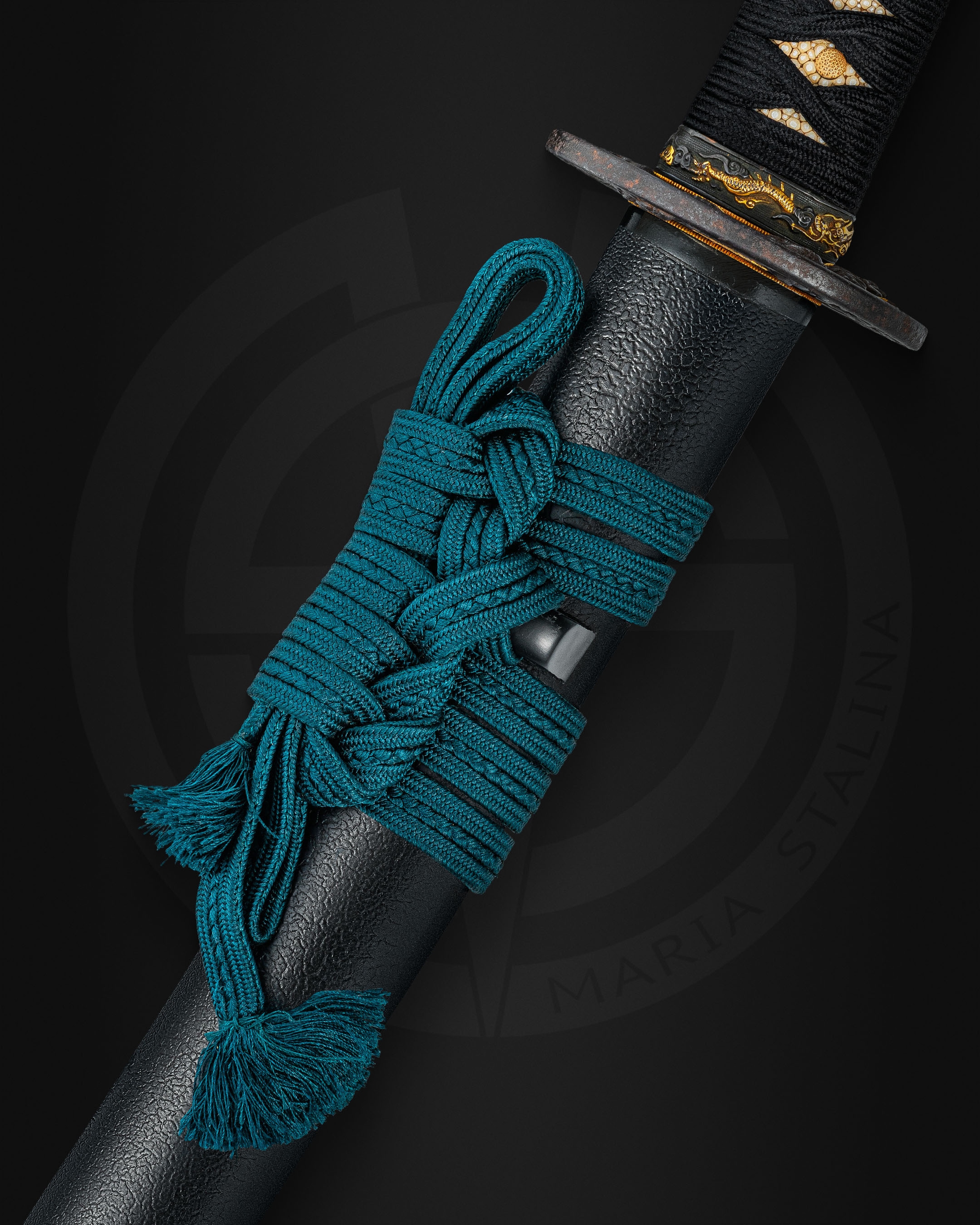
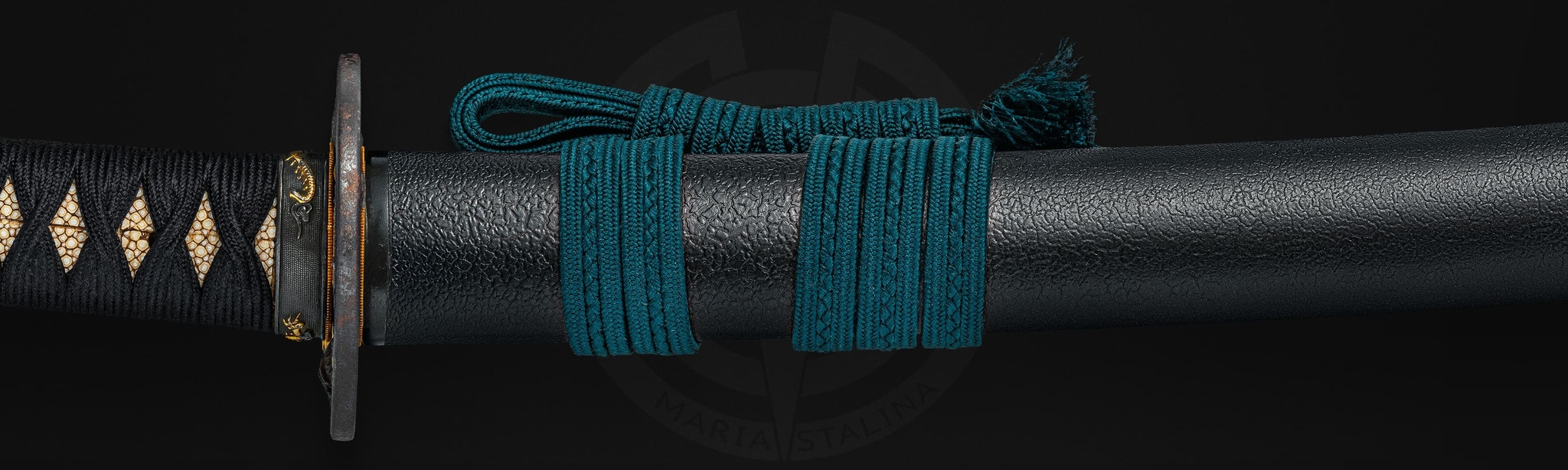
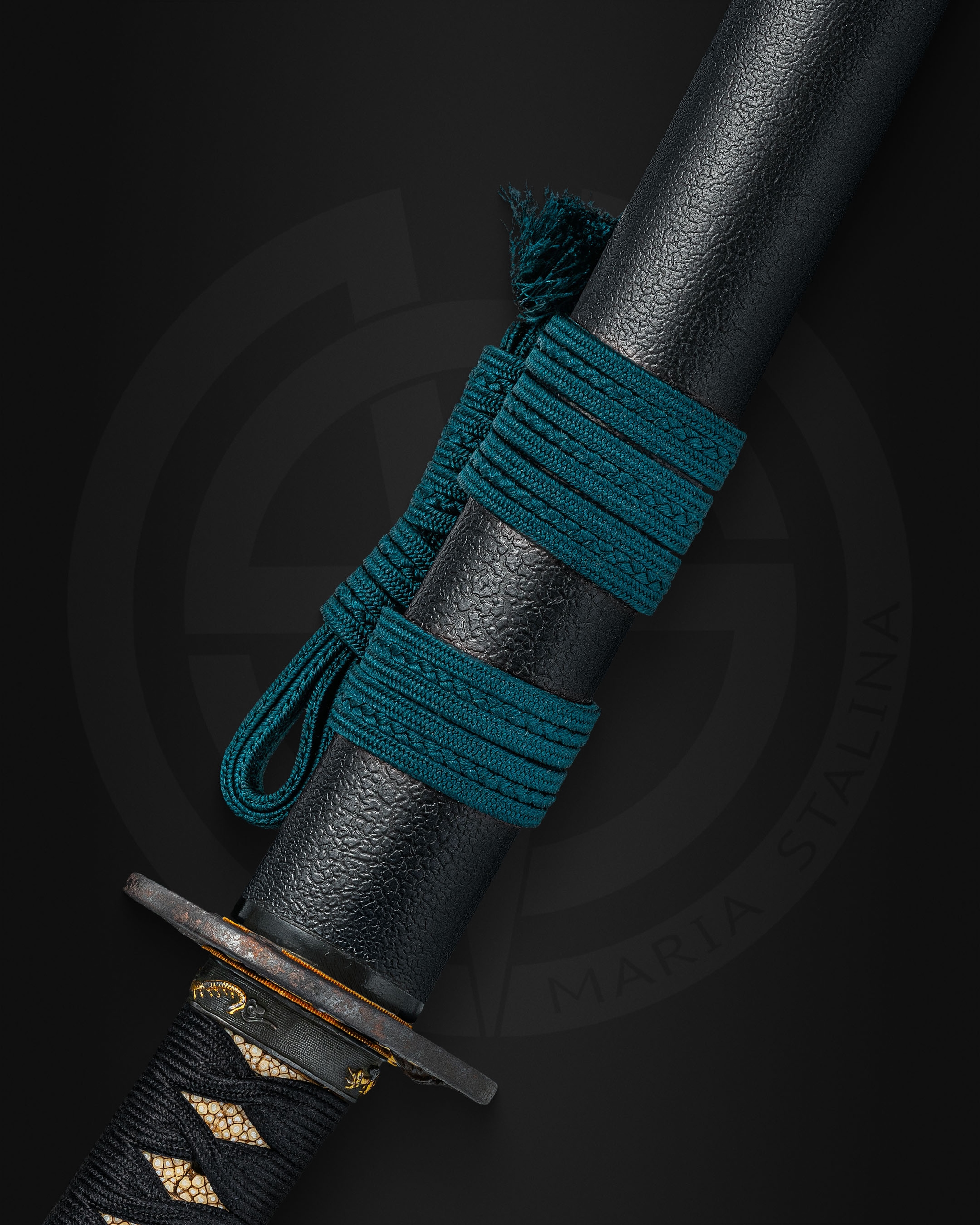
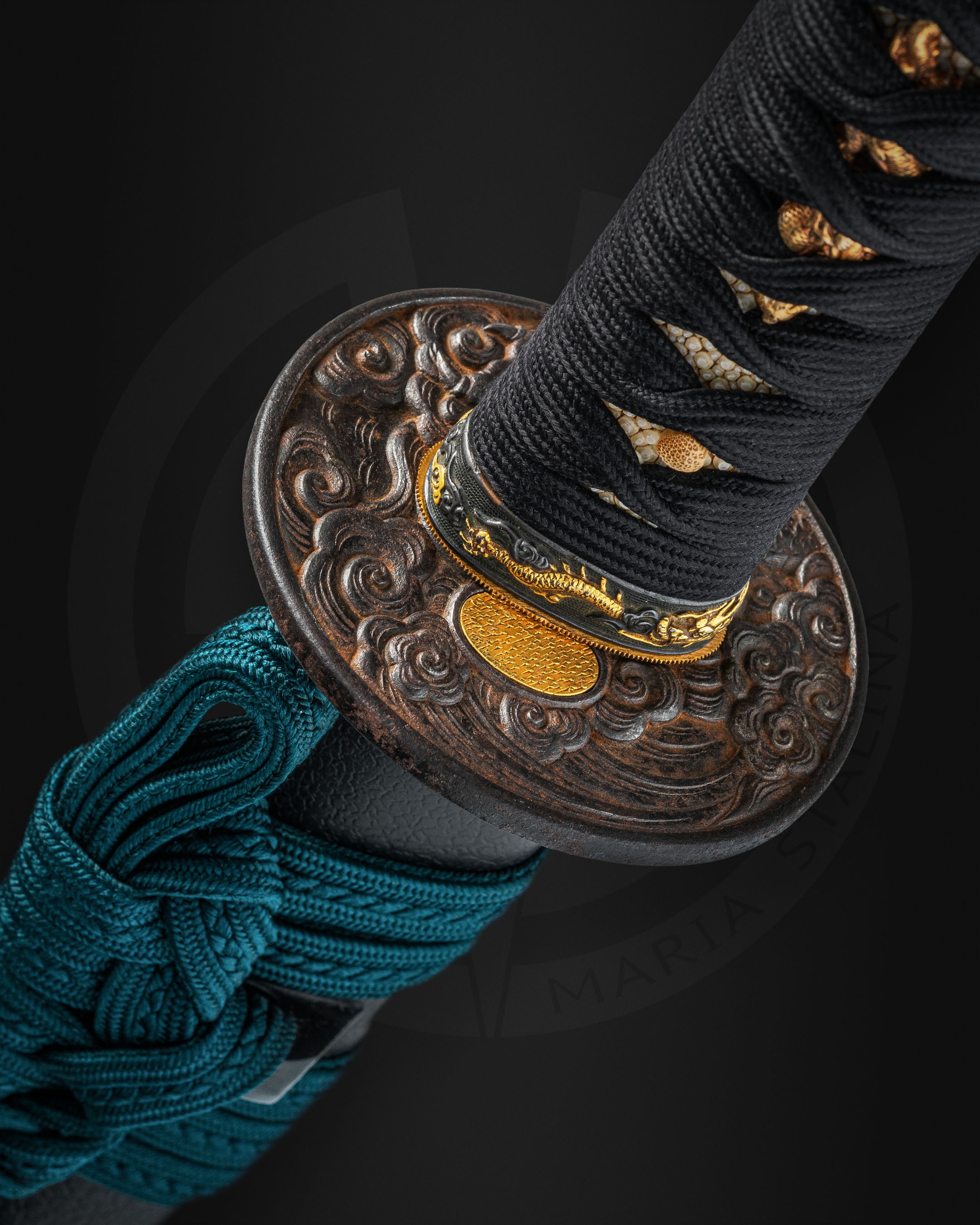
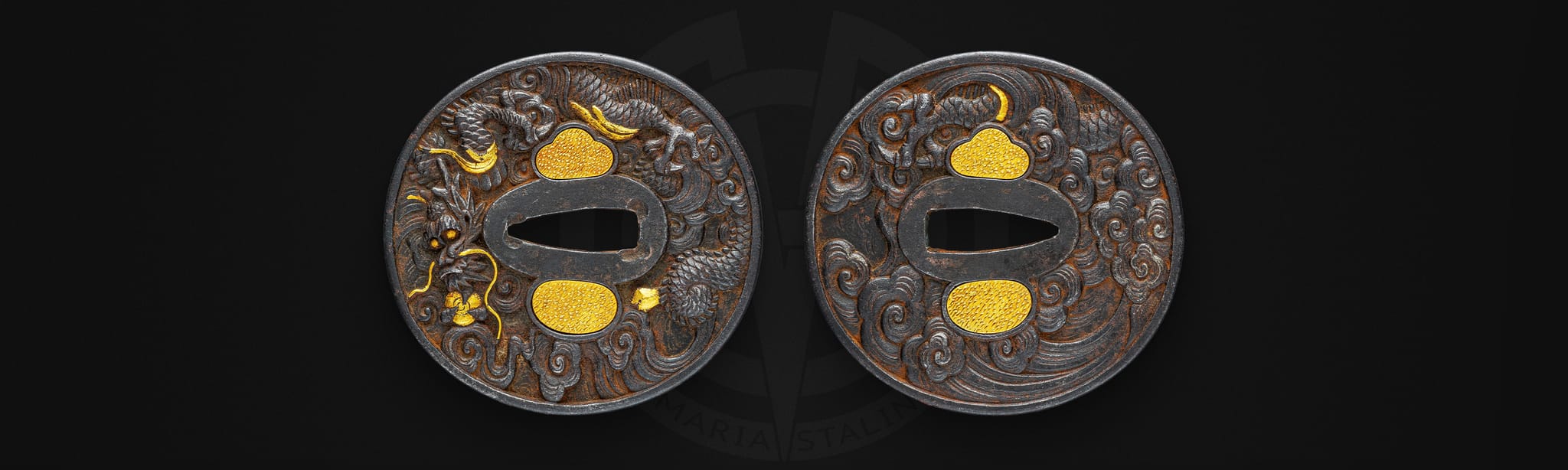
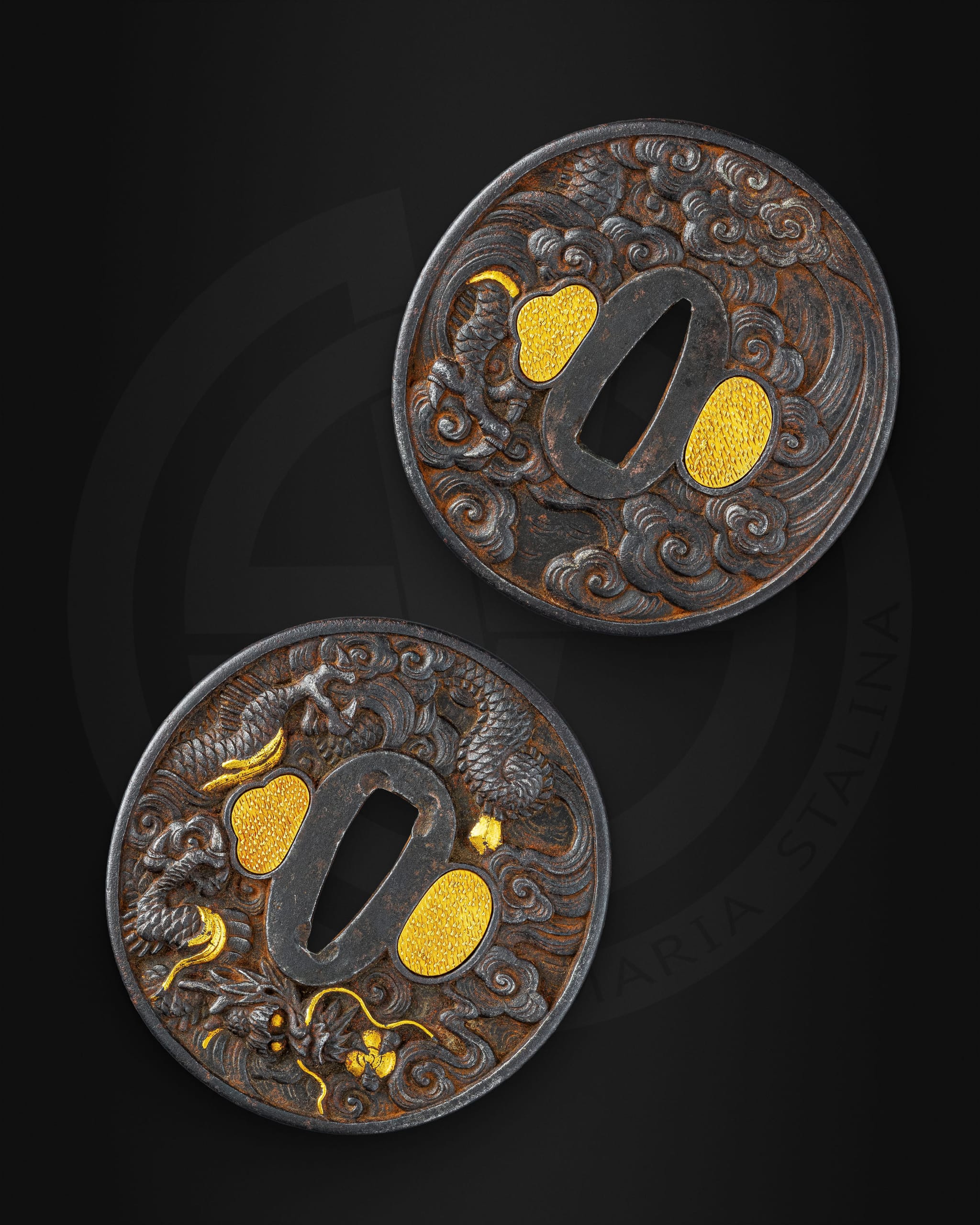
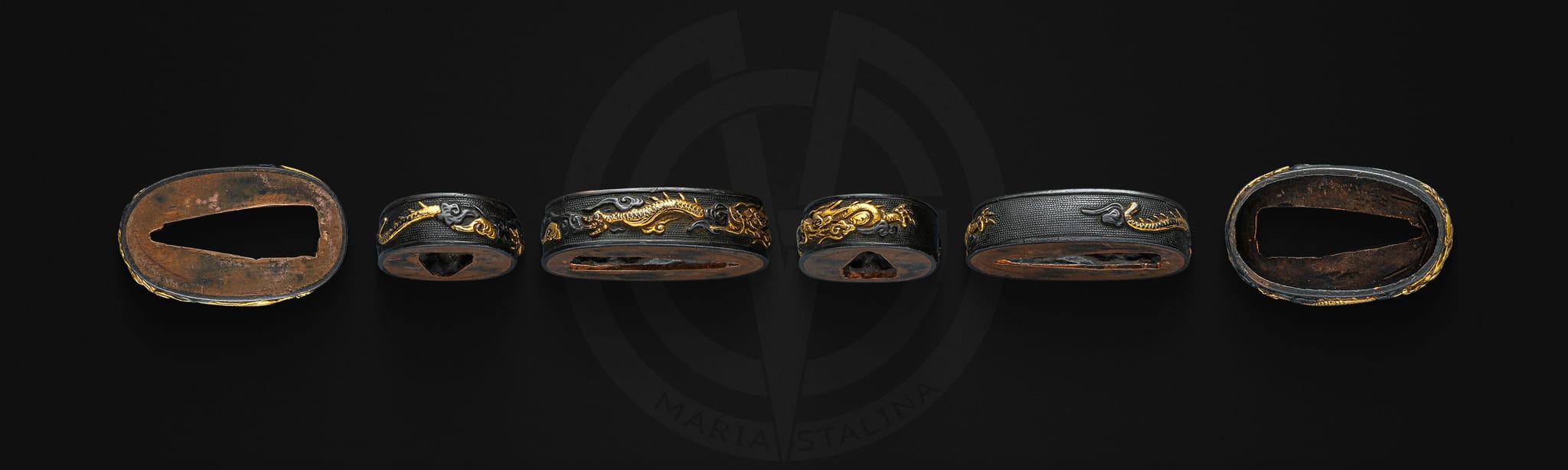
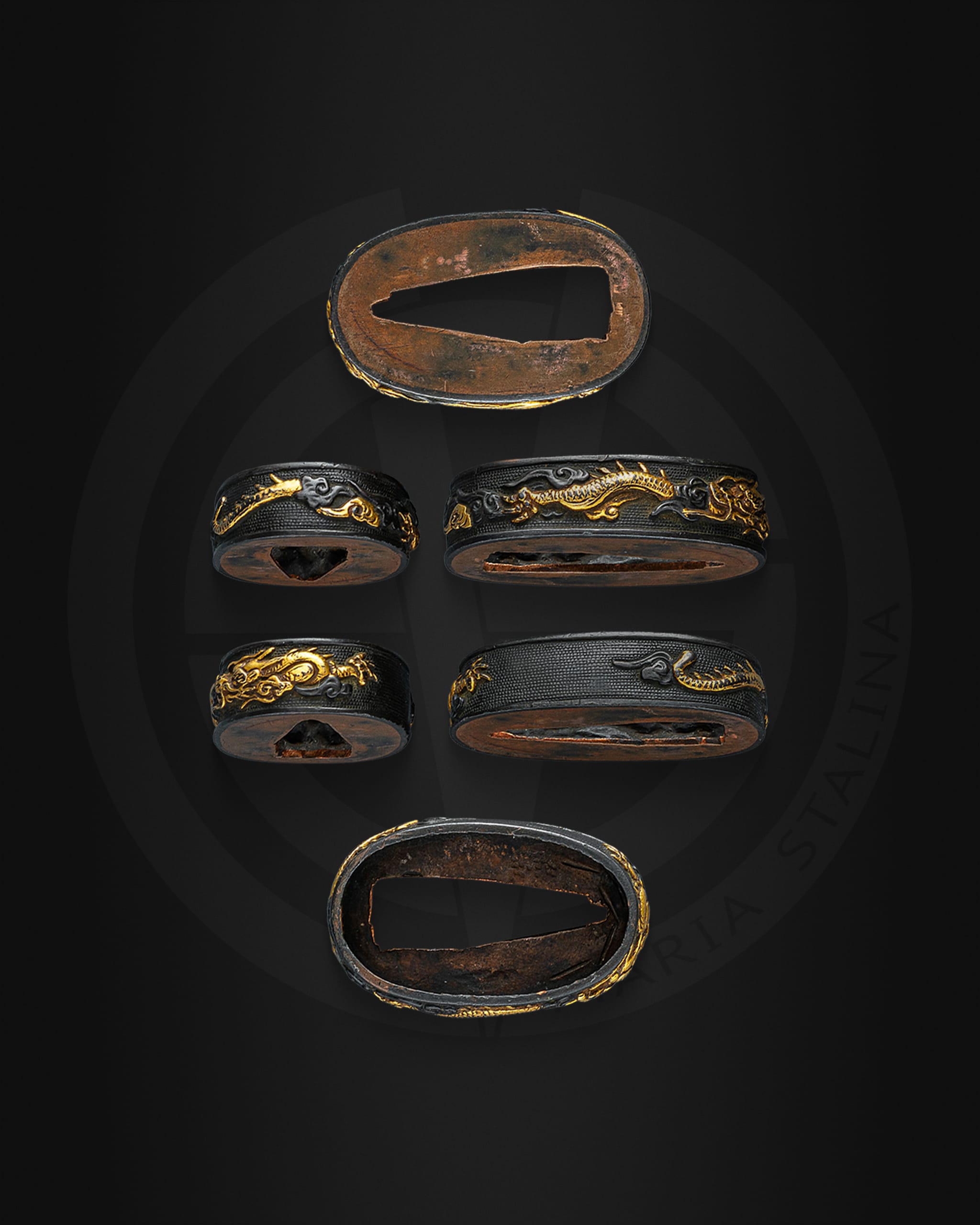
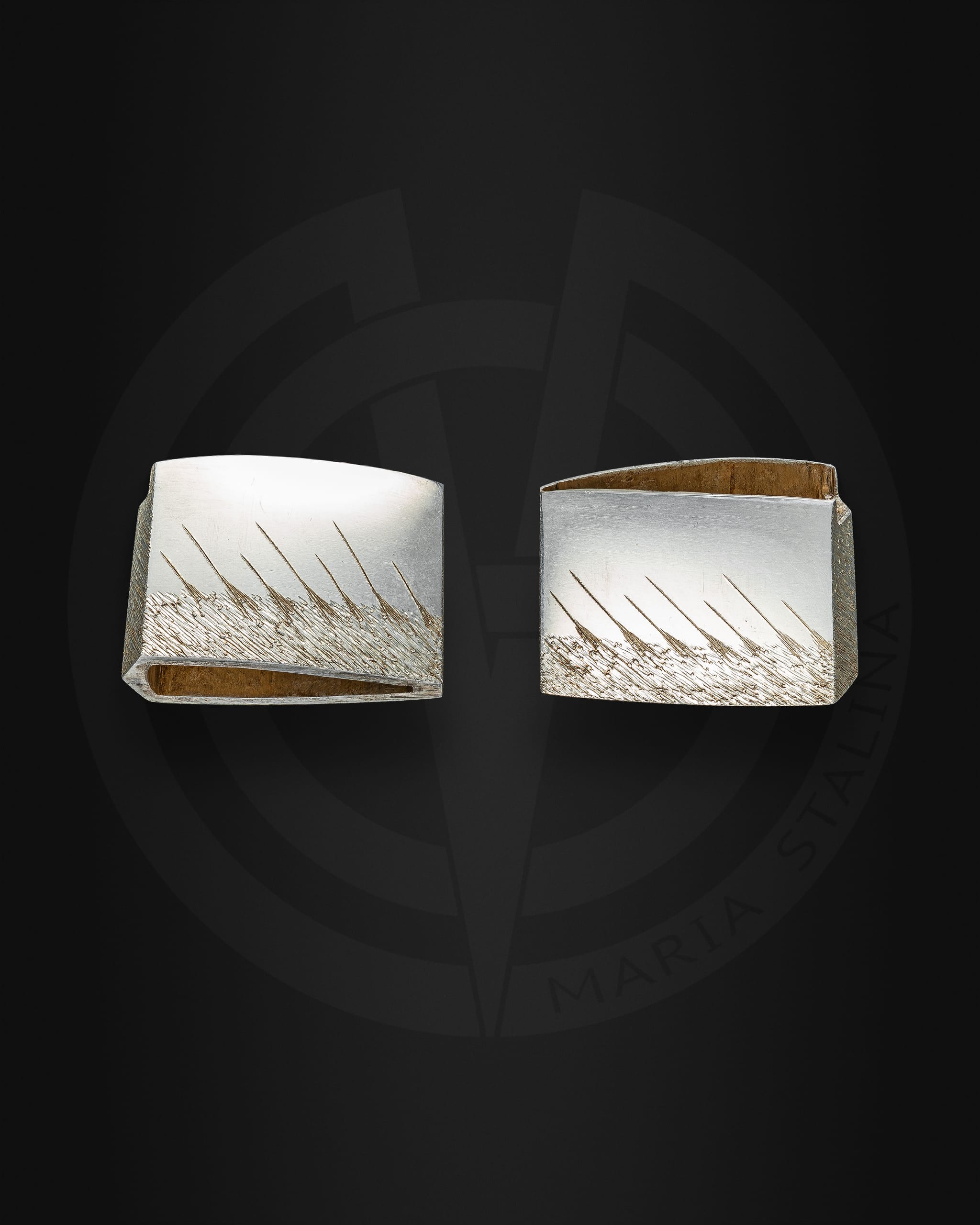
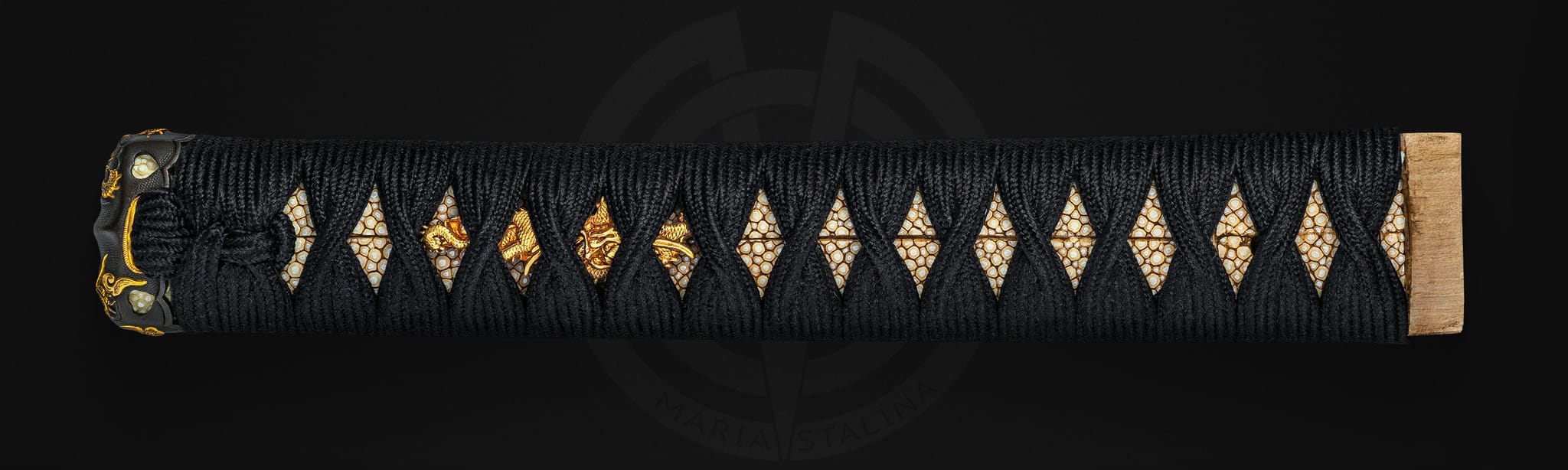
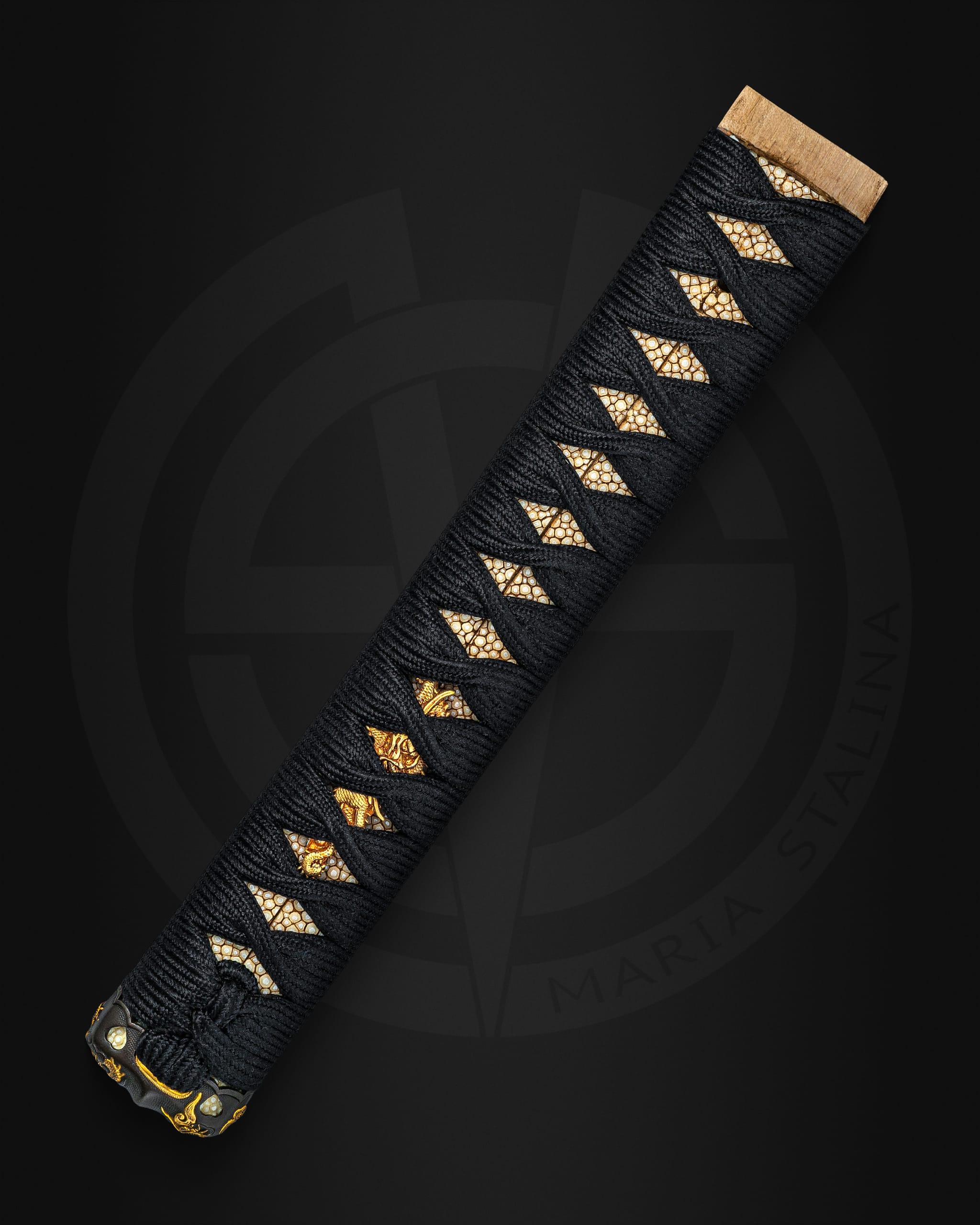
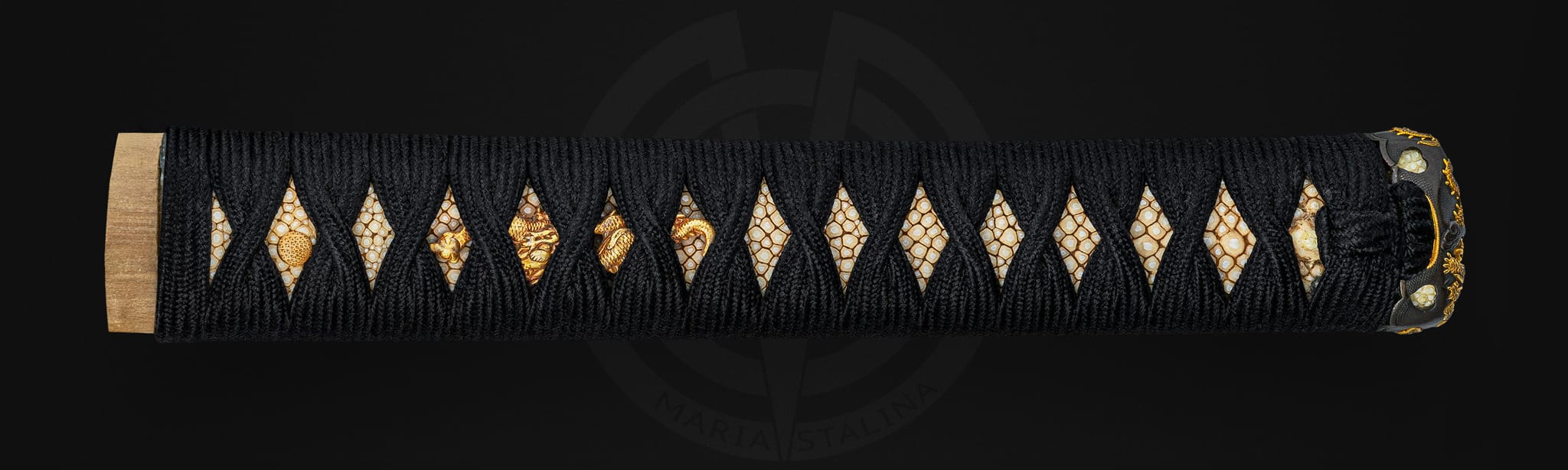
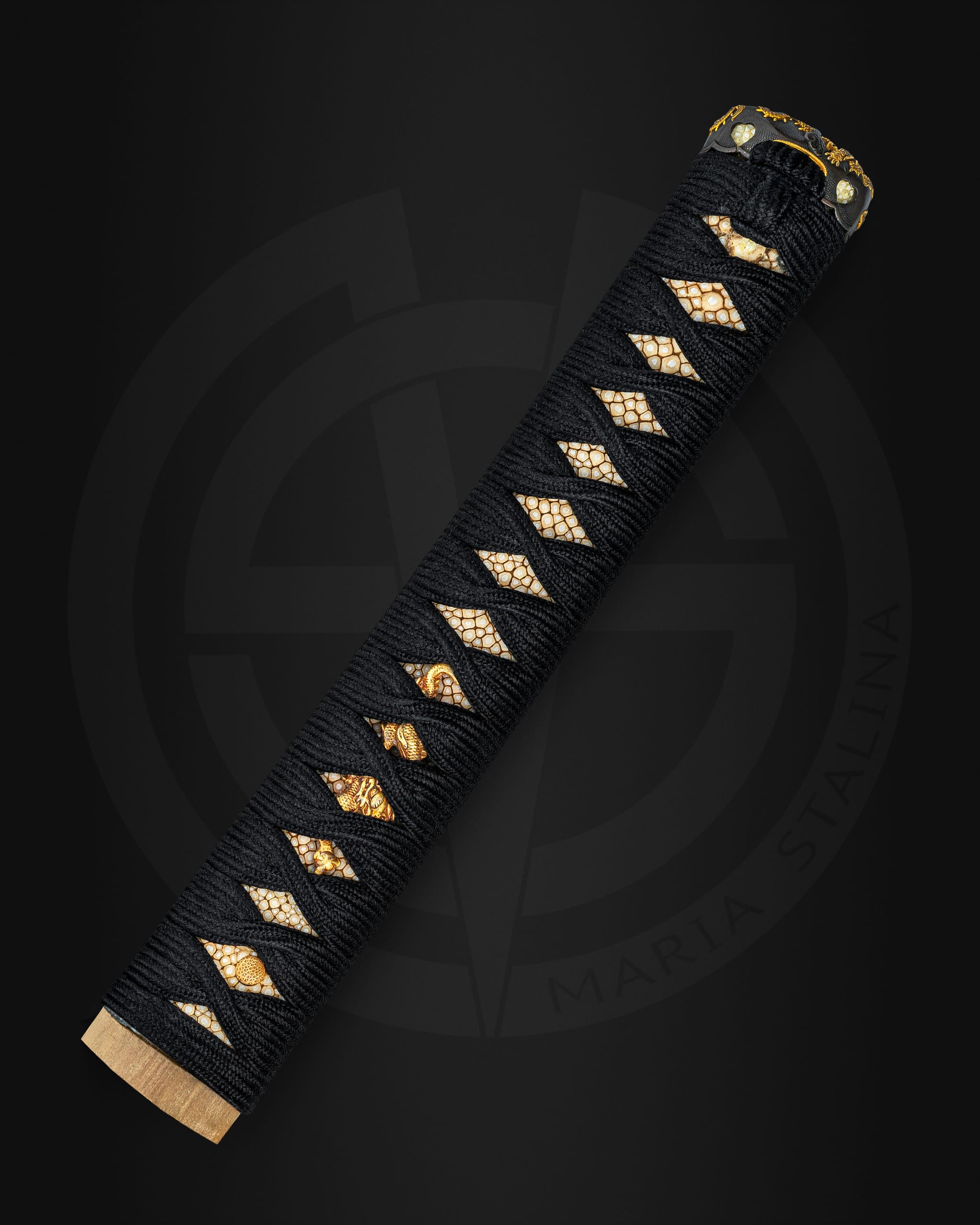
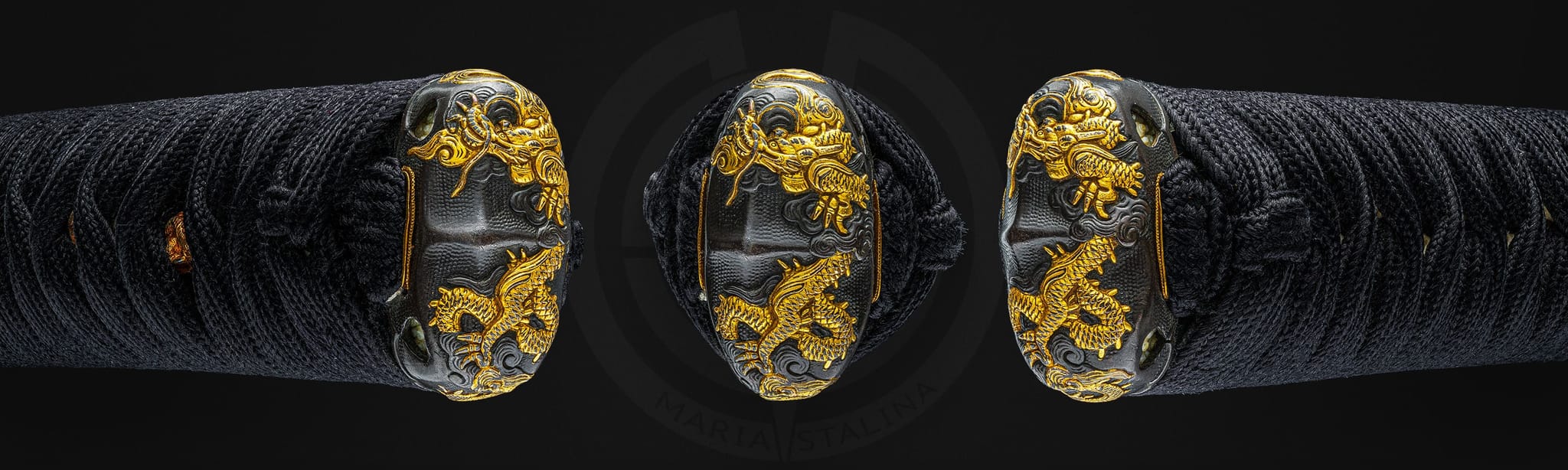
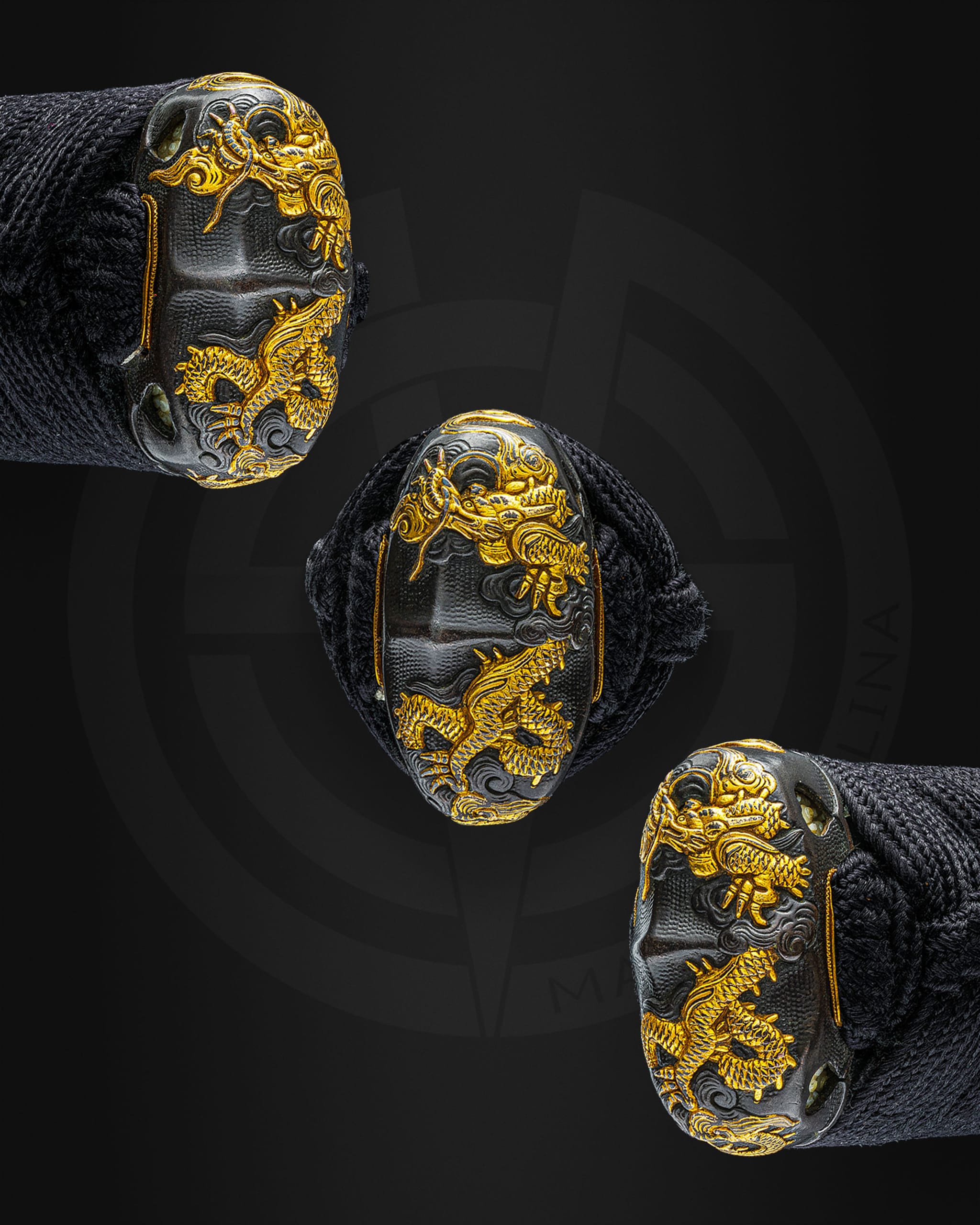
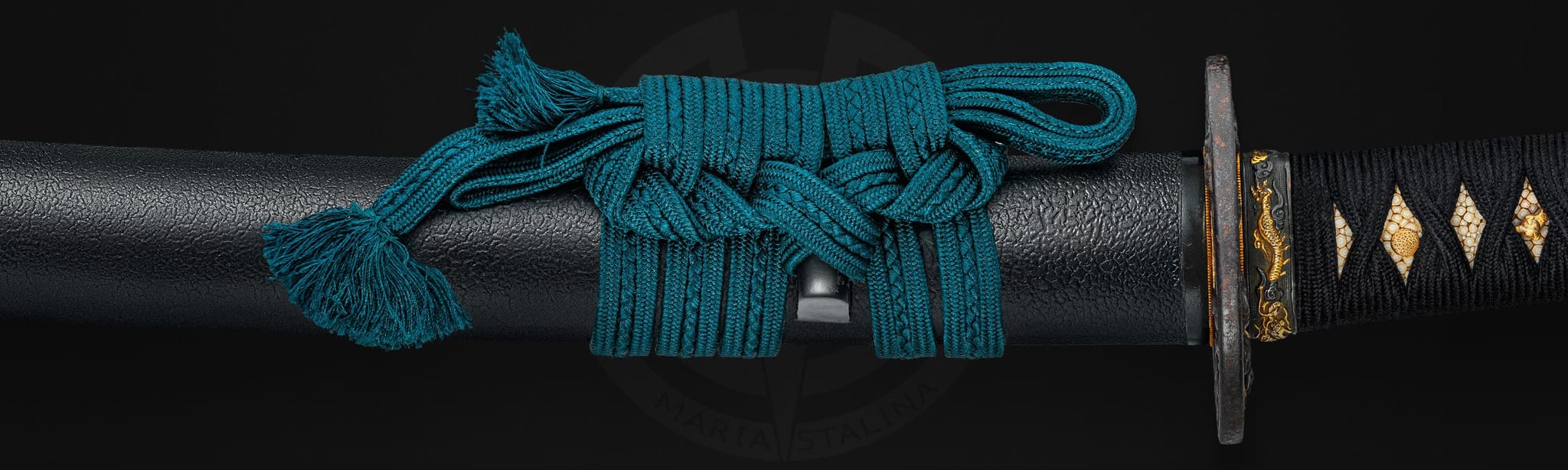
The katana is mounted in an artistic koshirae; a separate storage mount (shirasaya) is included with the sword.
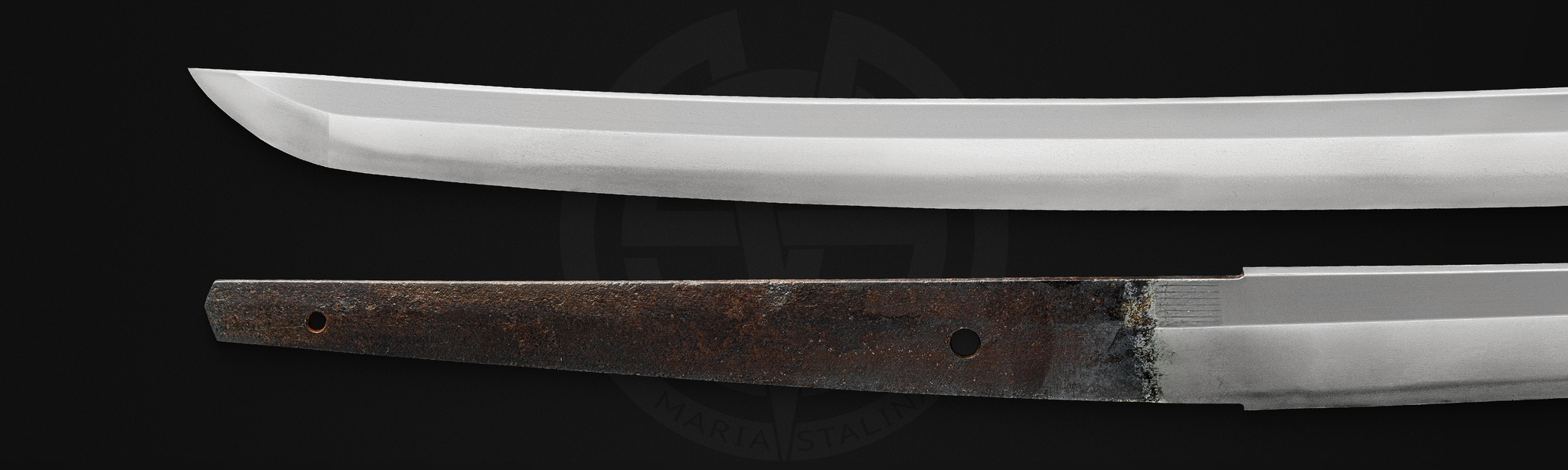
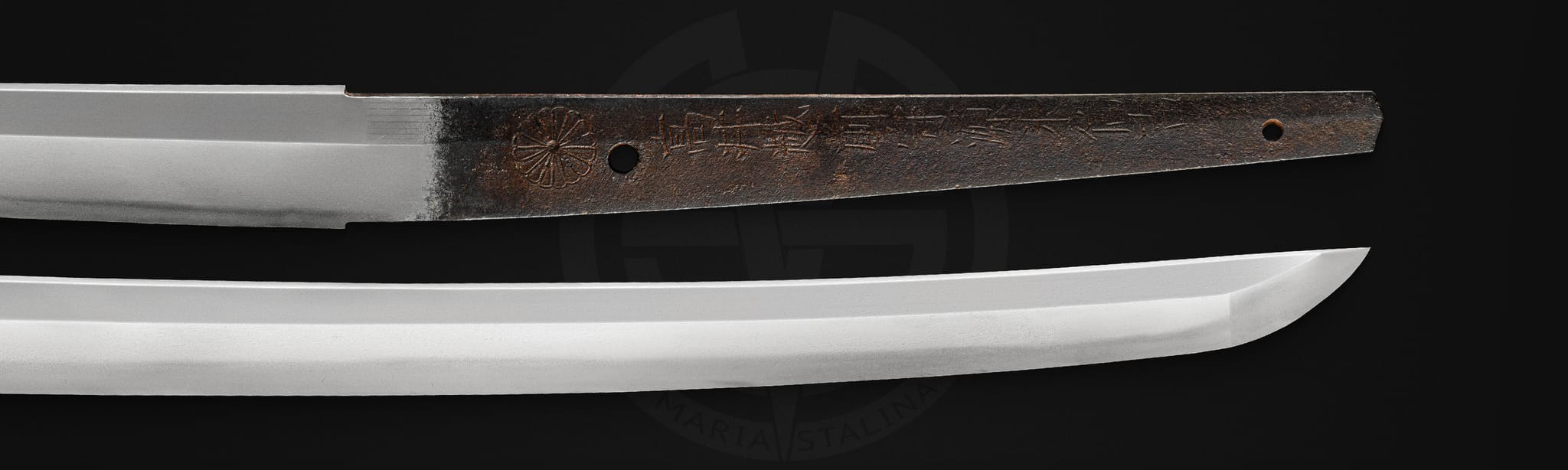
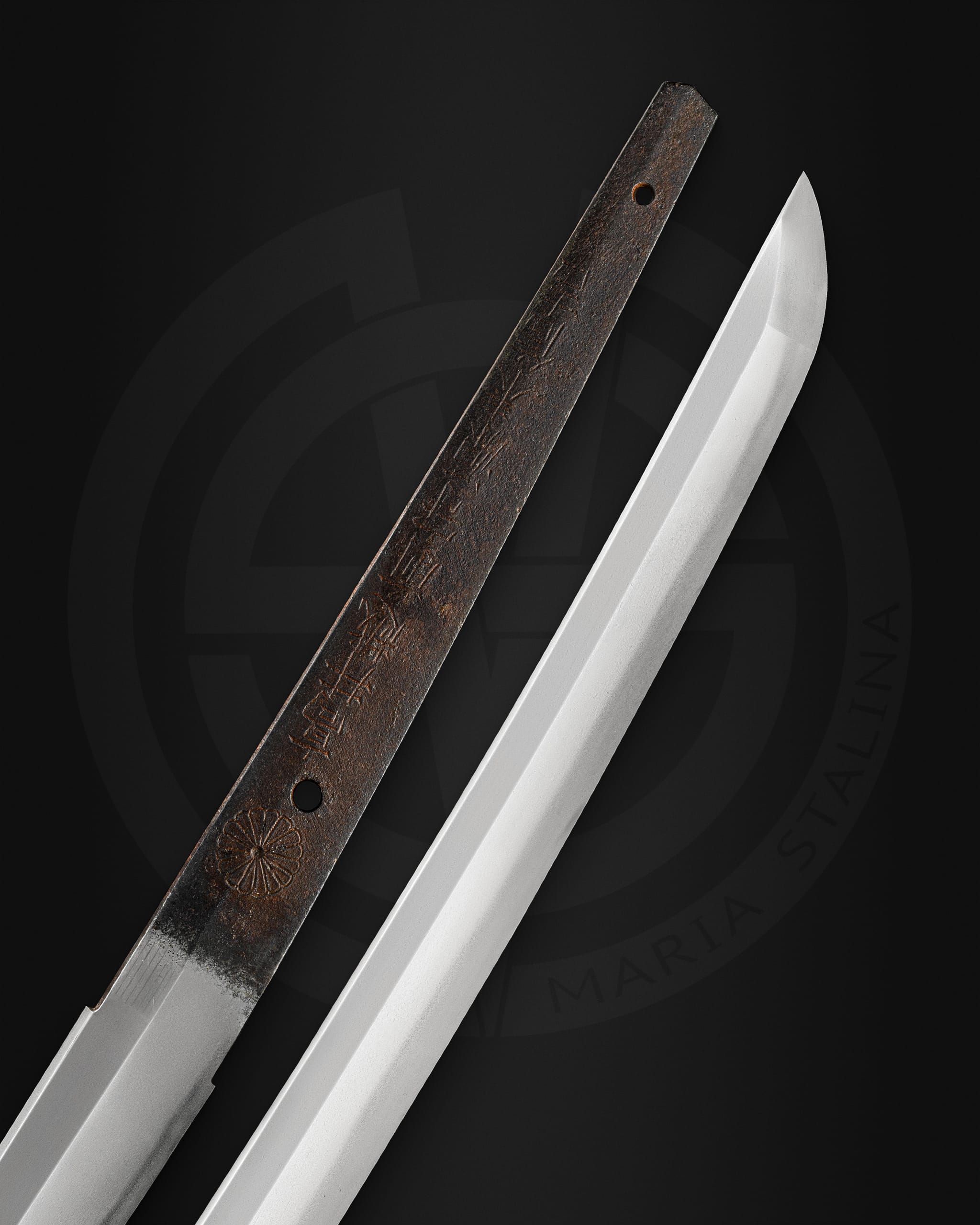
The forged structure of the blade features a subtle pattern imitating wood grain (jihada). The temper line (hamon) is masterfully executed in a straight style with a slight wave-like curve.
The tang (nakago) is engraved by a stylized image of the imperial sixteen-petaled chrysanthemum, along with the maker's signature, both embossed into the metal surface.
The sword's maker, Nobuyoshi III (Echizen no Kami Nobuyoshi), belongs to the Mishina school of swordsmiths, founded in the late 16th century by artisans from the Mino province.
Nobuyoshi III worked from the Meireki era (1655–1658) to the Genroku era (1688–1704).
Set of the sword has two certificates issued by the Society for the Preservation of Japanese Art Swords (NBTHK): one for the blade, designated as a "Specially Preserved Sword" ("Tokubetsu Hozon Token"), next one for the tsuba, designated as a "Preserved" ("Hozon").